Revolutionizing API Production: How Advanced Micronization Equipment Elevates Pharmaceutical Efficie
What if a single micron could determine the success of a life-saving drug? In the high-stakes world of API (Active Pharmaceutical Ingredient) production, particle size isn’t just a detail—it’s the difference between therapeutic efficacy and failure.
Introduction:
The global pharmaceutical industry is racing to meet demands for faster, safer, and more precise drug formulations. At the heart of this challenge lies a critical process: micronization . For API manufacturers, achieving sub-10-micron particle sizes isn’t optional—it’s essential for bioavailability, solubility, and regulatory compliance. But how do you ensure your micronization equipment is built to deliver consistency, scalability, and compliance in an increasingly competitive landscape?
Why Micronization Equipment is the Unsung Hero of API Manufacturing
1. Bioavailability Breakthroughs
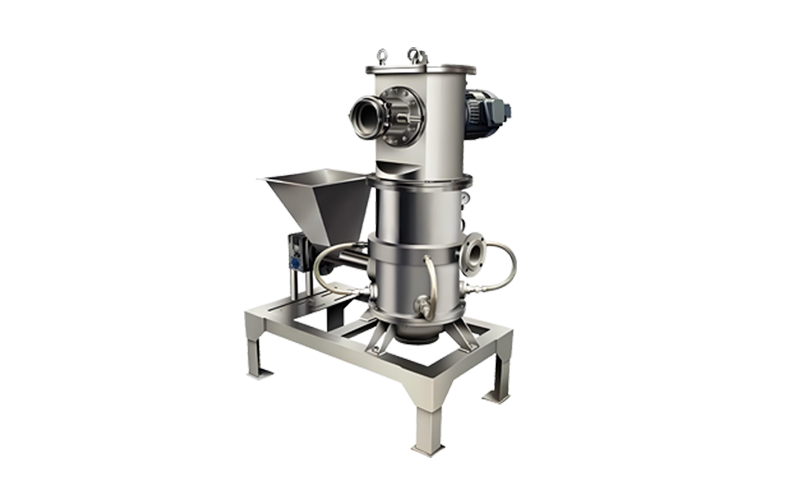
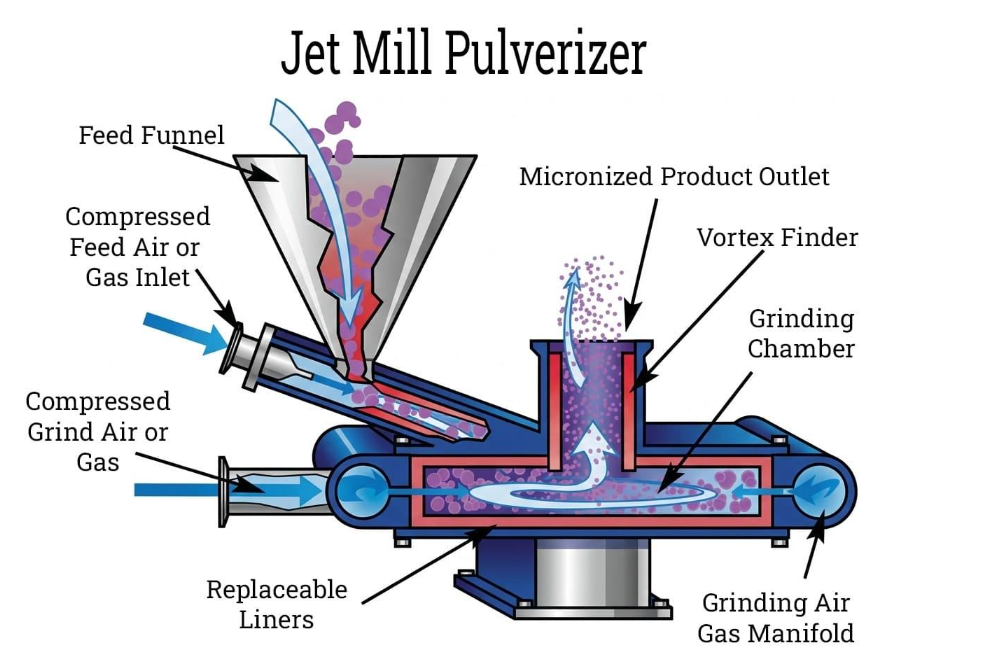
APIs with poorly controlled particle sizes risk uneven dissolution rates, undermining drug performance. Modern micronizers like air jet mills and fluidized bed opposed jet mills enable ultra-fine, uniform powders, ensuring predictable absorption and therapeutic outcomes.
2. Regulatory Readiness
With agencies like the FDA and EMA tightening guidelines on particle engineering, equipment must adhere to cGMP, ATEX, and FDA-compliant designs. Our ISO-certified micronization systems integrate real-time monitoring and closed-loop controls to eliminate contamination risks—a non-negotiable for global pharma players.
3. Cost Efficiency Through Precision
Traditional grinding methods waste up to 15% of API material due to overheating or inconsistent outputs. Advanced cryogenic micronization and nano-milling technologies minimize thermal degradation, slashing waste while boosting yield—a game-changer for high-value APIs.
5 Questions to Ask When Choosing Micronization Equipment for API Production
1. Does the system offer scalability from R&D to commercial batches without compromising particle distribution?
2. Can it handle heat-sensitive or high-potency APIs with closed-loop inert gas systems ?
3. Is the equipment designed for easy cleaning and validation to meet audit requirements?
4. Does your provider offer customizable solutions for niche APIs (e.g., hygroscopic or explosive materials)?
5. What’s the total cost of ownership —including energy use, maintenance, and downtime?
The Future of Micronization: Trends Shaping API Manufacturing
• AI-Driven Process Optimization : Machine learning algorithms now predict particle behavior, enabling real-time adjustments for unmatched consistency.
• Green Micronization : Energy-efficient designs and recyclable gas systems reduce carbon footprints while cutting operational costs.
• Nanotechnology Integration : Hybrid systems combining micronization with nano-milling are unlocking new frontiers in drug delivery.
Why Partner with Shanghai Jeter Powder Equipment Co.?
As a leader in micronization equipment for API production , we engineer solutions that balance innovation with practicality. Our systems are trusted by top-tier pharma companies for:
✅ Zero cross-contamination with fully sanitizable stainless-steel construction.
✅ Particle size distributions (PSD) as tight as ±0.5 microns .
✅ 24/7 remote technical support and lifecycle management.
CTA :
Don’t let outdated technology limit your API’s potential. Explore our Micronization Solutions or schedule a free consultation to discover how our equipment can optimize your particle engineering workflows—and position your products at the forefront of modern medicine.