Why Traditional Grinding Systems Fail Below 10 Microns — And How Jet Pulverizer Technology Solves It
Introduction
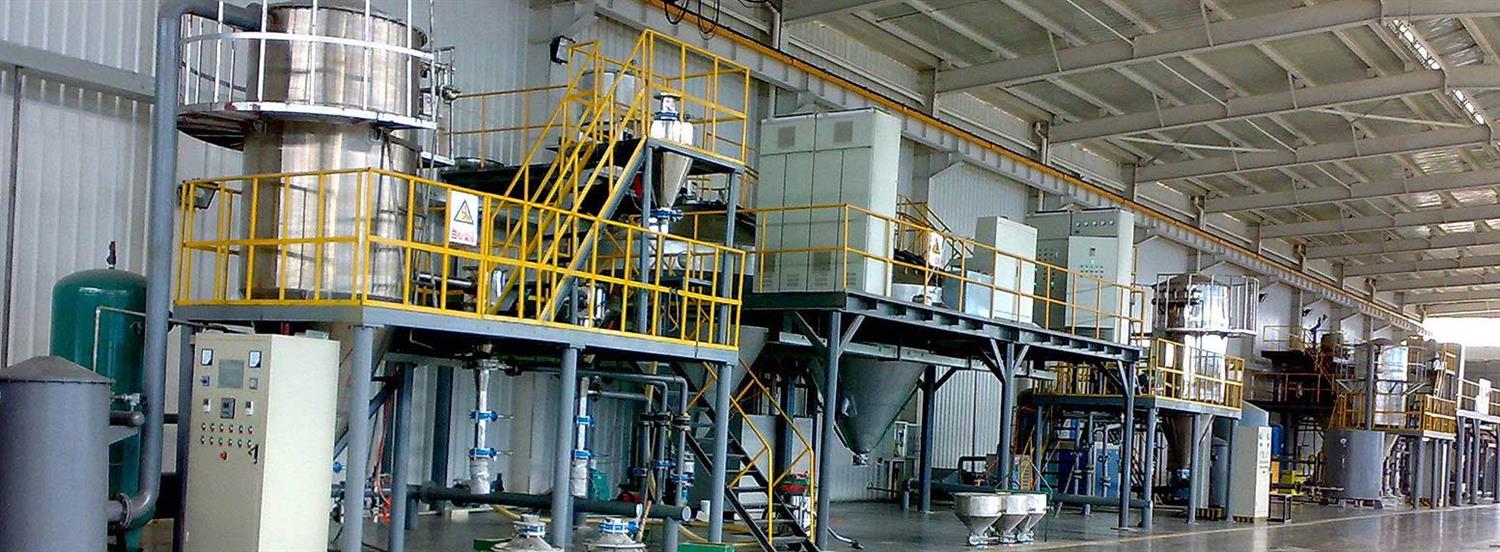
In modern powder processing industries, the demand for ultrafine particle sizes continues to grow rapidly.
Manufacturers in pharmaceuticals, lithium battery materials, chemicals, food additives, and advanced ceramics are increasingly required to produce powders with tighter particle size distributions, higher purity, and more stable processing performance.
However, many conventional grinding systems struggle when particle sizes fall below 10 microns.
Problems such as excessive heat generation, metal contamination, broad PSD (Particle Size Distribution), and unstable fineness control have become major challenges in industrial production.
This is one reason why jet pulverizer technology has gained significant attention worldwide.
Compared with traditional mechanical grinding systems, jet pulverizers offer contamination-free micronization, excellent particle size control, and high efficiency for ultrafine powder production.
In this article, we will explain:
Why conventional grinding systems become inefficient below 10 μm
How jet pulverizer technology works
Key advantages of jet pulverizer systems
Important factors affecting micronization performance
Common industrial applications
How to choose the right jet pulverizer system
What Is a Jet Pulverizer?
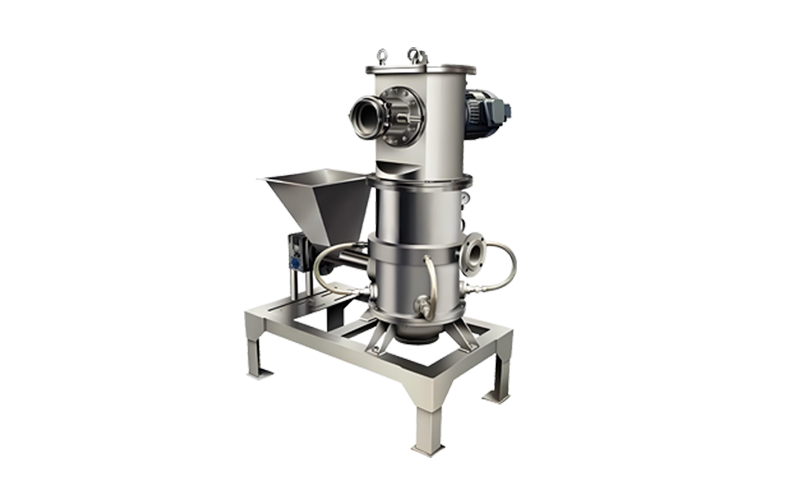
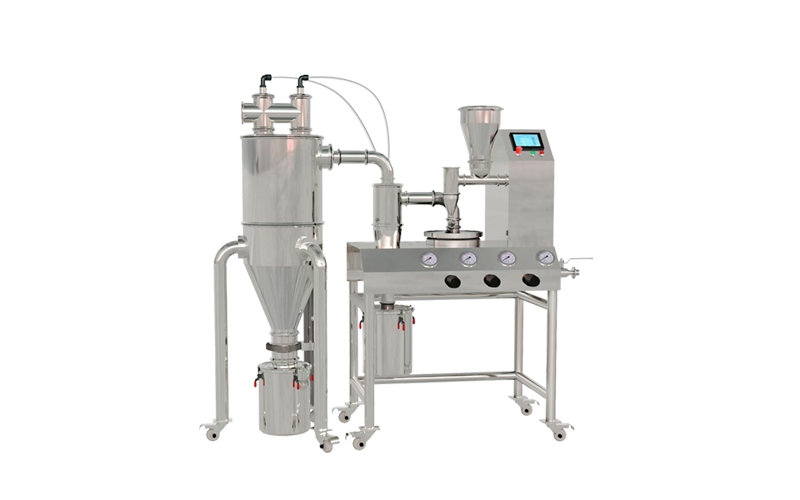
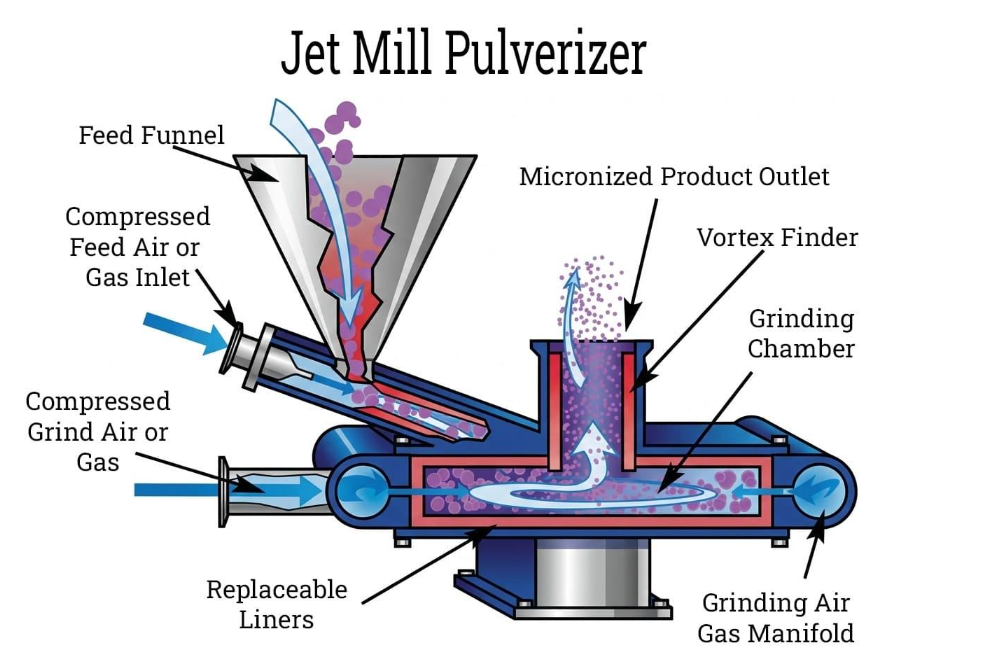
A jet pulverizer, also known as a jet mill, is an ultrafine grinding system that uses high-speed compressed air or inert gas to accelerate particles inside a grinding chamber.
Unlike conventional mills that rely on mechanical impact from grinding media, jet pulverizers use particle-to-particle collision to achieve micronization.
Because there is no direct contact between grinding components and materials, jet pulverizers can produce extremely fine powders with minimal contamination.
Jet pulverizer systems are commonly used for:
Pharmaceutical API micronization
Battery material processing
High-purity chemicals
Pigments and dyes
Food additives
Advanced ceramic powders
Modern jet pulverizers are capable of producing particle sizes ranging from several microns down to submicron levels depending on the material characteristics and system configuration.
Why Traditional Grinding Systems Fail Below 10 Microns
1. Excessive Heat Generation
Traditional grinding systems such as hammer mills, ball mills, and pin mills generate significant heat during operation.
As particle sizes become smaller, more grinding energy is required, which increases friction and temperature inside the grinding chamber.
This creates several problems:
Material degradation
Reduced product stability
Loss of volatile ingredients
Chemical structure damage
Product discoloration
Heat-sensitive materials such as APIs, food ingredients, and specialty chemicals are particularly vulnerable.
2. Metal Contamination
Conventional grinding systems rely on direct contact between:
Grinding media
Liners
Rotors
Materials
Over time, mechanical wear introduces metal contamination into the final product.
This is unacceptable for industries requiring high purity, including:
Pharmaceuticals
Electronic materials
Battery materials
Fine chemicals
Jet pulverizers significantly reduce contamination risks because grinding occurs through particle collision rather than mechanical impact.
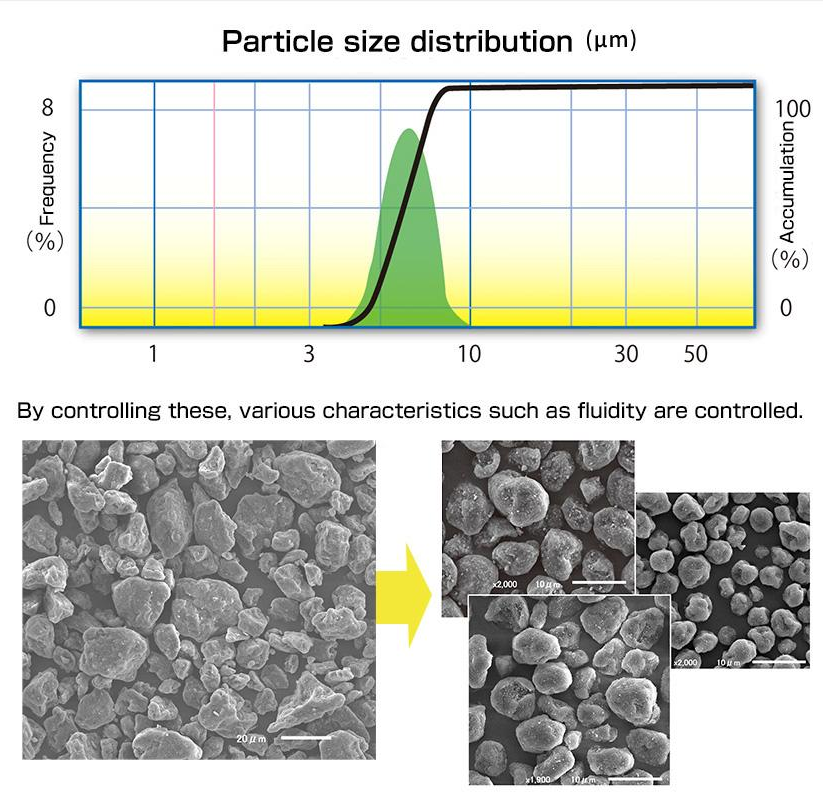
3. Broad Particle Size Distribution
Achieving narrow particle size distribution is critical for many industrial applications.
Traditional grinding systems often produce:
Over-ground fine particles
Under-ground coarse particles
Unstable PSD performance
This affects:
Product consistency
Flowability
Dissolution rate
Reactivity
Product quality
Jet pulverizer systems offer much better control of D50 and D90 values through integrated air classification technology.
4. Low Efficiency in Ultrafine Grinding
Mechanical grinding becomes increasingly inefficient as particle size decreases.
Energy consumption rises sharply while production efficiency declines.
Many traditional mills struggle to achieve stable production below:
D97 < 10 μm
D90 < 5 μm
Jet pulverizers are specifically designed for ultrafine grinding applications and maintain higher efficiency at smaller particle sizes.
How Jet Pulverizer Technology Works
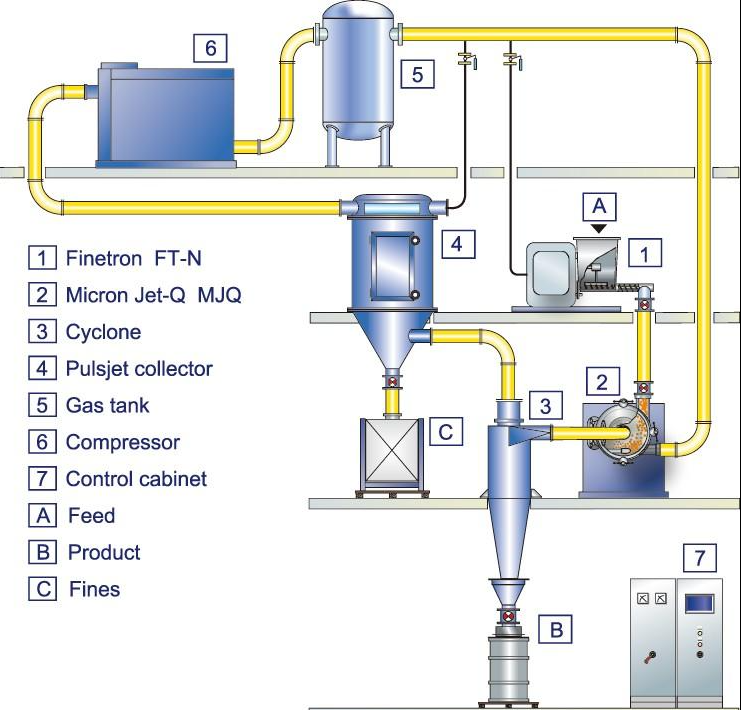
High-Speed Airflow Acceleration
The core principle of a jet pulverizer is the use of compressed air or inert gas.
The gas enters the grinding chamber through specially designed nozzles at extremely high velocity.
This creates:
Supersonic airflow
Turbulent particle movement
High-energy particle collision
Particles collide with each other repeatedly until the desired fineness is achieved.
Internal Classification System
Most modern jet pulverizer systems include an internal classifier wheel.
The classifier separates particles according to size.
Fine particles pass through the classifier
Coarse particles return for further grinding
This allows precise control of:
D50
D90
Top cut size
PSD consistency
Classifier speed is one of the most important operating parameters affecting final product quality.
Key Advantages of Jet Pulverizer Systems
Contamination-Free Grinding
Because there is minimal mechanical contact during grinding, jet pulverizers provide:
High purity production
Low contamination risk
Suitable processing for sensitive materials
This is essential for pharmaceutical and electronic applications.
Narrow Particle Size Distribution
Jet pulverizers can achieve:
Uniform particle sizes
Stable PSD
Better product consistency
This improves downstream processing performance.
Low Temperature Grinding
The expansion of compressed air inside the grinding chamber creates a cooling effect.
This helps protect heat-sensitive materials during micronization.
Excellent Micronization Capability
Jet pulverizers are capable of achieving:
D50 < 5 μm
D90 < 10 μm
Submicron particle sizes
depending on the material properties.
Common Industrial Applications of Jet Pulverizer Systems
Pharmaceutical Industry
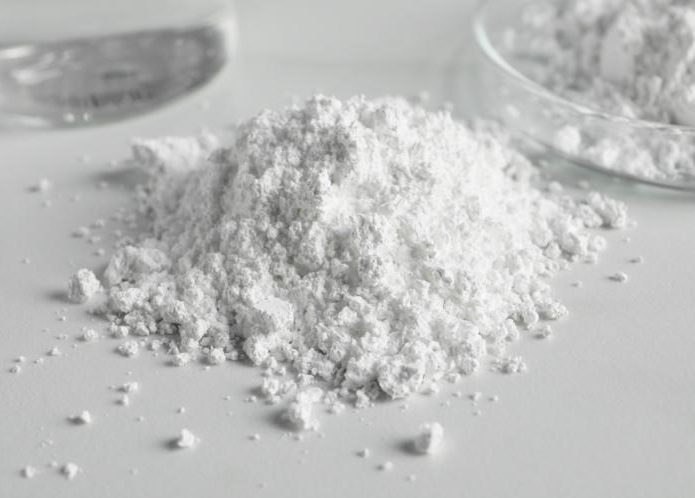
Jet pulverizers are widely used for API micronization.
Applications include:
Inhalation powders
Antibiotics
Steroids
Heat-sensitive drugs
Advantages include:
GMP compliance
Contamination-free processing
Precise particle control
Lithium Battery Materials
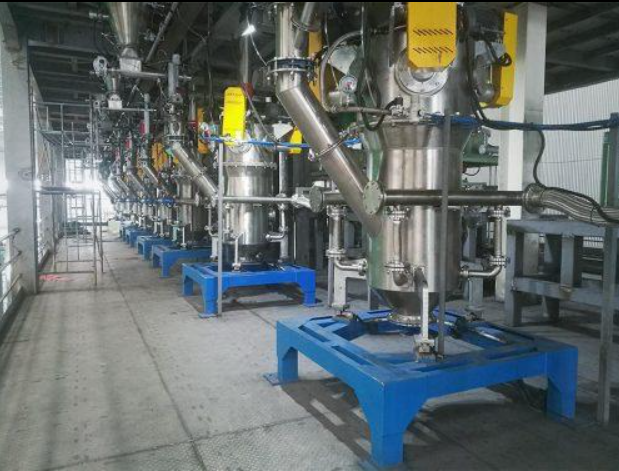
Battery manufacturers require ultrafine powders with consistent PSD.
Jet pulverizers are used for:
Cathode materials
Anode materials
Solid-state battery powders
Precise particle control improves battery performance and stability.
Chemical Industry
Jet pulverizers are commonly used for:
Pigments
Pesticides
Flame retardants
Specialty chemicals
The narrow PSD improves product uniformity and application performance.
Food and Nutraceutical Industry
Food-grade jet pulverizers are suitable for:
Spices
Food additives
Nutritional powders
Plant extracts
Low-temperature grinding helps preserve active ingredients.
Important Factors Affecting Jet Pulverizer Performance
Material Hardness
Harder materials require higher grinding energy.
This affects:
Air consumption
Throughput
Wear resistance requirements
Moisture Content
High moisture materials may cause:
Agglomeration
Reduced efficiency
System blockage
Pre-drying may be necessary.
Compressed Air Pressure
Higher pressure generally increases grinding energy and particle collision intensity.
However, excessive pressure may increase operating costs.
Classifier Speed
Classifier speed directly affects final particle size distribution.
Higher classifier speed usually produces finer particles.
Air Consumption
Compressed air consumption is a critical operating cost factor in jet pulverizer systems.
Optimizing airflow design can improve overall system efficiency.
How to Choose the Right Jet Pulverizer
When selecting a jet pulverizer system, manufacturers should evaluate:
Required fineness
Production capacity
Material properties
Moisture sensitivity
Explosion protection requirements
GMP/FDA standards
Energy consumption
Cleaning requirements
Different applications may require:
Spiral jet mills
Fluidized bed jet mills
Opposed jet mills
Proper system selection is essential for long-term production stability.
Future Trends in Jet Pulverizer Technology
As industrial manufacturing moves toward higher precision and cleaner production, jet pulverizer technology continues evolving.
Future development trends include:
Lower energy consumption
Intelligent automation
AI-based particle size control
Improved classifier efficiency
Higher throughput systems
Better explosion protection design
Demand for ultrafine powder processing is expected to continue growing across multiple industries.
Conclusion
Traditional grinding systems often struggle to maintain stable performance below 10 microns.
Problems such as heat generation, contamination, broad PSD, and low efficiency limit their ability to meet modern ultrafine powder processing requirements.
Jet pulverizer technology provides an effective solution through:
High-speed particle collision
Contamination-free grinding
Precise air classification
Stable micronization performance
For industries requiring high-purity ultrafine powders, jet pulverizers are becoming an increasingly important part of modern powder processing systems.
Shanghai Jeter Powder Equipment specializes in customized jet pulverizer solutions for pharmaceutical, chemical, battery material, and advanced powder processing industries worldwide.