What is a Jet Mill?
Introduction
Jet mills are essential tools in a variety of industries when it comes to producing ultra-fine powders. From pharmaceuticals to chemicals, food and ceramics, the ability to grind materials to extremely fine sizes is critical for many applications. In this article, we will explore the features, benefits and applications of jet mills.
What is a jet mill?
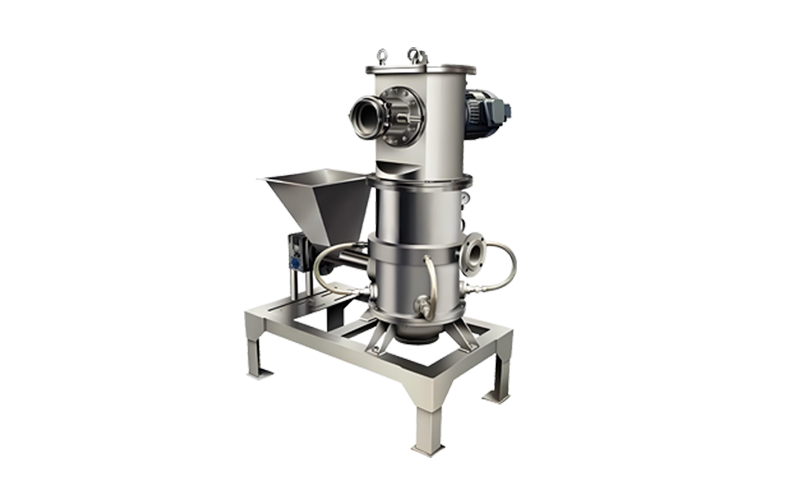
A jet mill is a type of grinder that utilizes a high-speed jet of compressed air, steam, or gas so that particles are accelerated by the high-speed air stream causing them to collide with each other, and these collisions cause the material to break down into finer particles. Unlike conventional mills that use mechanical means such as rotating blades or hammers, in jet milling, due to its unique mechanism of operation, jet mills are particularly suited to fine materials and materials that require a high degree of purity.
How do jet mill work?
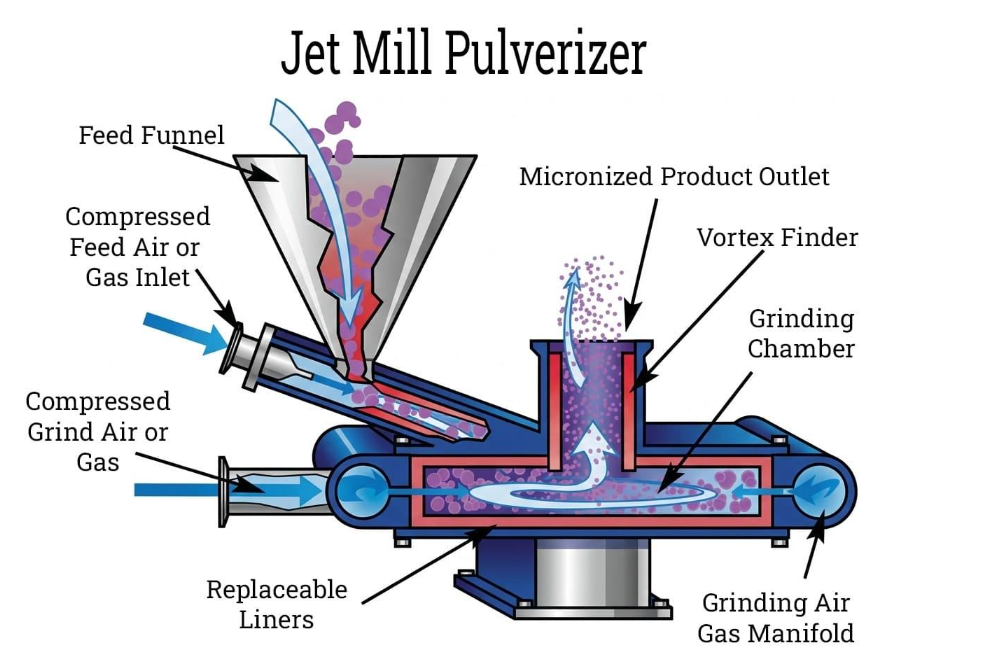
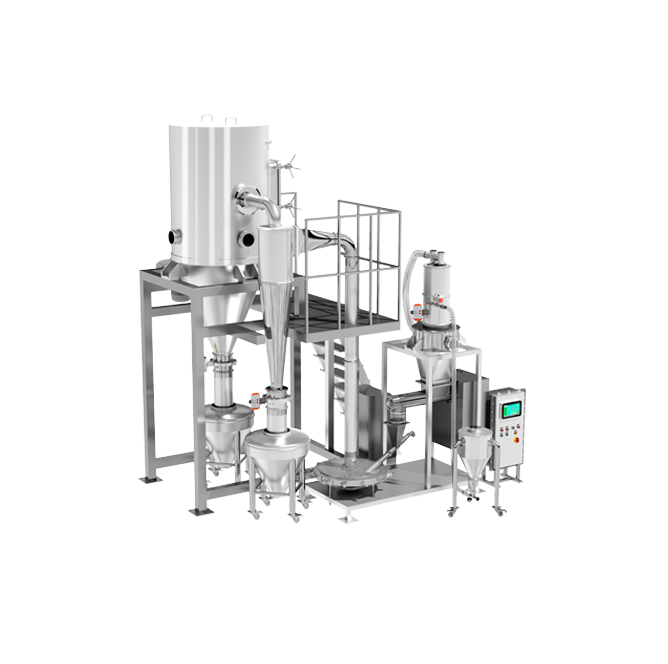
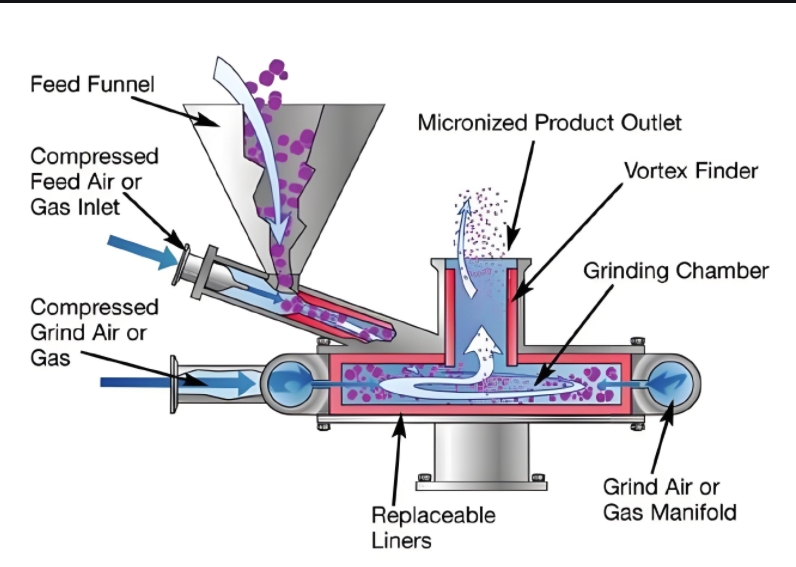
The working principle of a jet mill relies firstly on the availability of compressed air or other gases (e.g. air streams, steam, etc.), which is accelerated through a nozzle to supersonic speeds (usually two times the speed of sound or higher) and ejected through the nozzle into the grinding chamber to form a stationary or rotating gas, where the accelerated particles collide together, and the qualified particles are carried through the air stream to the cyclone, baghouse, or dust collection system, which separates the The finely ground final powder is separated and collected.
What does the design of a jet mill typically include?
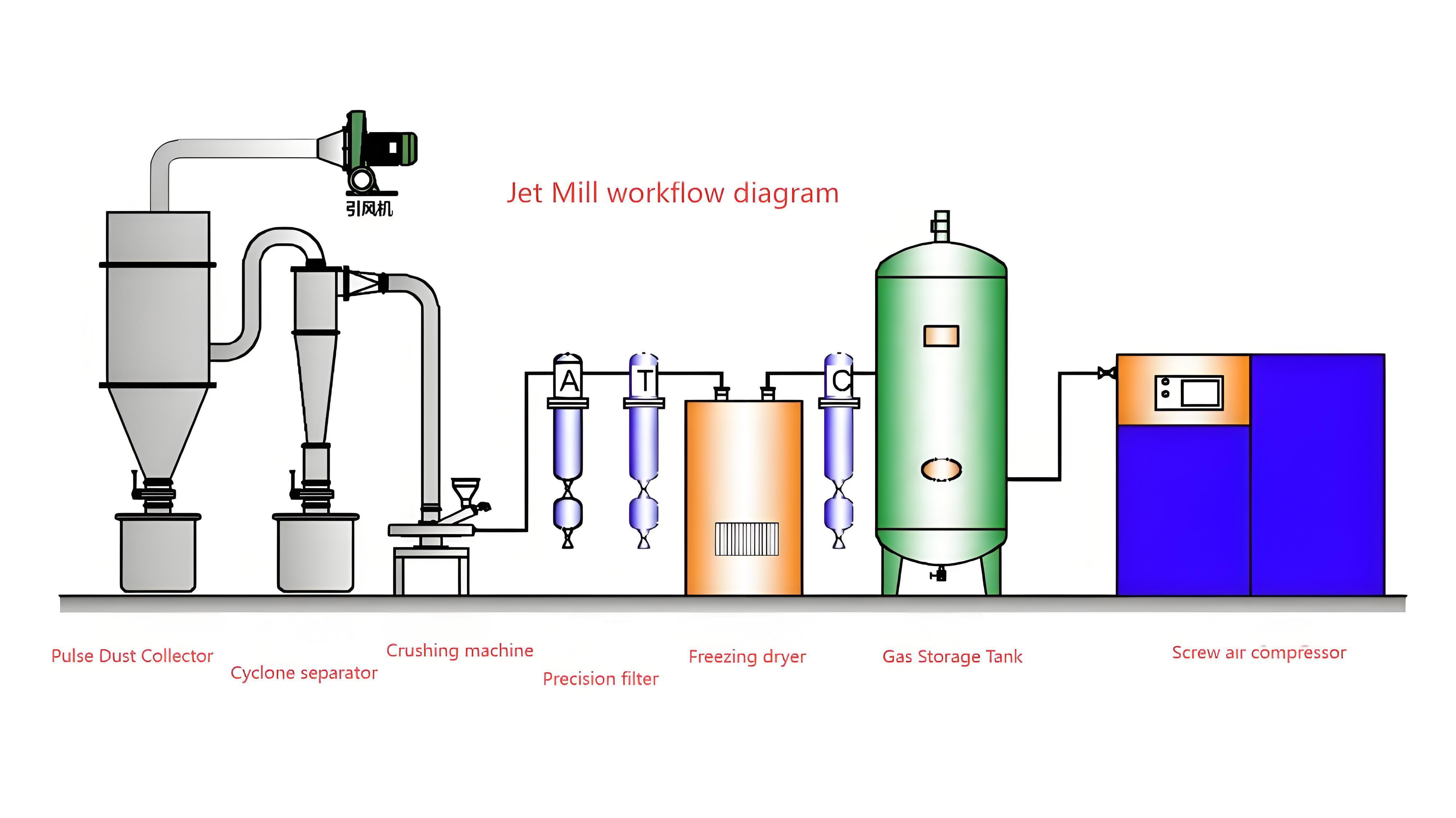
· compressor or air source: compressed air, steam, nitrogen
· Grinding chamber: The comminution chamber is the core part of the jet mill to complete the comminution operation, and its shape, size and structure will directly affect the comminution effect.The design should consider the air velocity, pressure distribution in the pulverizing chamber and the residence time of the material in the pulverizing chamber.
· Nozzle or Jet Stream: The nozzle is the part of the jet mill that generates the high velocity airflow, and its design has a significant impact on the comminution efficiency and quality. The proper shape, size and number of nozzles need to be designed to ensure that the jet stream has sufficient velocity and impact.
Collection system design: The collection system includes bag collector, cyclone collector and so on, which is used to collect the fine powder after pulverization. The design should consider the collection efficiency, system resistance and ash removal.
Control system design: the control system includes electric control, gas control, etc., used to realize the automatic control of the mill. Designed to consider the reliability of the control system, safety and ease of operation.
Material selection: according to the characteristics of the crushed material and the working conditions of the mill, select the appropriate material, such as stainless steel, wear-resistant alloys.
Safety protection design: including the emergency stop system, overload protection, safety doors, etc., to ensure the safety of the operator.
Auxiliary system design: including material supply system, cooling system, lubrication system, etc., to ensure that the pulverizer can run stably.
Environmental and energy-saving design: taking into account the requirements of environmental protection and energy saving, the design needs to reduce dust emissions and improve energy efficiency.
What are the advantages of jet mill?
Uniform particle size distribution: small particles, uniform particle size distribution.
No pollution: no direct contact between material and crushing chamber, high purity
Low-temperature operation: no mechanical rotation, maintaining a constant temperature.
Easy to control: by adjusting the airflow speed, pressure and other parameters, you can easily control the particle size of the product.
Low wear and tear: Since the material and the crushing chamber are not in direct contact, the wear and tear of the equipment is small and the maintenance cost is low.
Wide range of application: used for a variety of materials crushed, including metal, non-metal, chemical, pharmaceutical, food and other industries.
High degree of automation: it can cooperate with the automation control system to realize the automation of the production process and reduce manual operation.
Simple structure: relatively simple structure, small footprint, easy to install and maintain.
Environmental protection: the operation process produces less noise and dust, which is conducive to environmental protection.
Large production capacity: continuous production, large production capacity, suitable for large-scale production.
What are the main industries in which Jet Mills are used?
Chemical industry: used to produce various ultrafine powders, such as pesticides, dyes, paints, catalysts, plastics, rubber, etc.
Mineral processing: used to pulverize non-metallic minerals, such as calcium carbonate, talc, graphite, kaolin, etc., to prepare ultrafine powder.
Pharmaceutical industry: used for fine pulverization of raw materials in the pharmaceutical process, as well as the ultra-fine pulverization of traditional Chinese medicine.
Food industry: for the pulverization of food additives, nutritional supplements, spices and pigments to increase their solubility and bioavailability.
Metallurgical industry: for the preparation of metal powders, such as tungsten powder, cobalt powder, nickel powder, etc., as well as the mixing and refining of alloy powders.
New material field: for the preparation of new materials such as high-performance ceramics, nano-materials, composites and so on.
Environmental protection industry: used for solid waste treatment and resourcing, such as the crushing of waste tires.
Cosmetic industry: used for fine pulverization of cosmetic raw materials, such as titanium dioxide, talcum powder, etc.
Why choose a Jet Mill?
The main reasons for choosing a Jet Mill include its ability to achieve ultra-fine pulverization, narrow particle size distribution, low-temperature operation to avoid decomposition of heat-sensitive materials, high product purity, wide range of applications and ease of operation. These features make them particularly suitable for applications requiring high precision powders in the pharmaceutical, chemical and food industries.
Conclusion
With its unique pulverizing technology and significant advantages, the Jet Mill is the ultimate solution for fine particle reduction. With the continuous progress of technology and application, the jet mill will play an important role in more fields and promote the development of related industries.