Jet Mill Working Principle: How Does a Jet Mill Achieve Ultra-Fine Particle Size?
Introduction
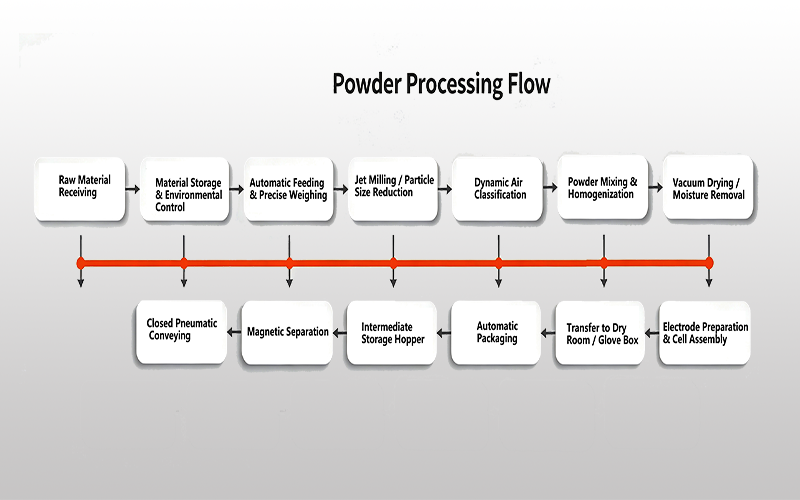
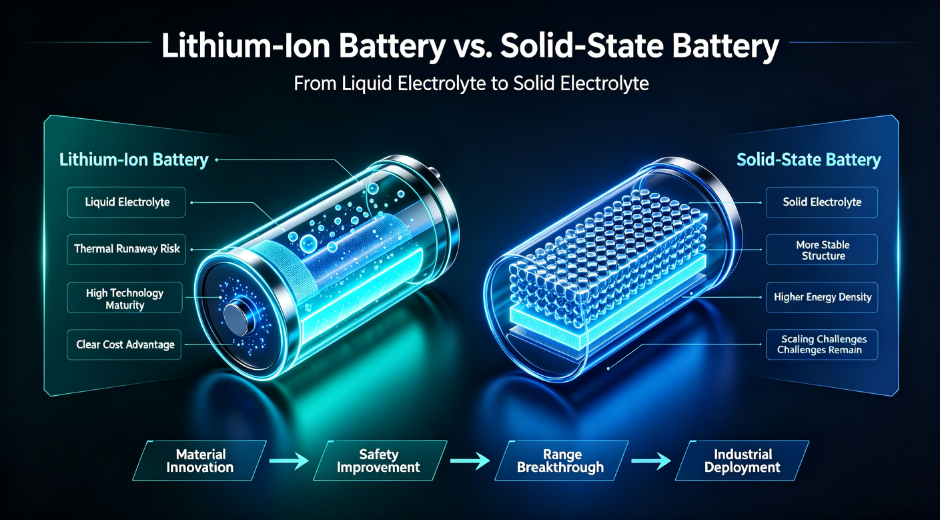
Jet milling is one of the most advanced particle size reduction technologies used in pharmaceutical, chemical, battery material, and food industries.
Unlike traditional mechanical grinding equipment, a jet mill uses high-speed compressed air or inert gas to accelerate particles and create particle-to-particle collisions. This unique grinding mechanism allows manufacturers to achieve ultra-fine powders without contamination from grinding media.
In this article, we explain the jet mill working principle, its key components, advantages, and typical industrial applications.
What Is a Jet Mill?
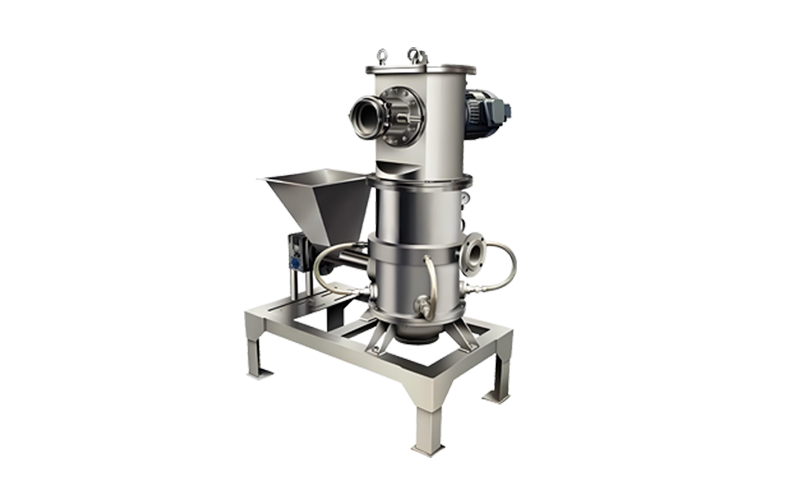
A jet mill is a particle size reduction system that uses compressed gas as the grinding energy source.
Instead of relying on mechanical blades, hammers, or grinding media, particles are accelerated by high-pressure gas streams and collide with each other at extremely high velocities.
The collision energy breaks particles into smaller sizes, often reaching D50 values below 10 microns and even below 1 micron in specialized applications.
Typical industries include:
Pharmaceutical API micronization
Battery materials processing
Chemical powder production
Food ingredients milling
High-purity mineral processing
Jet Mill Working Principle
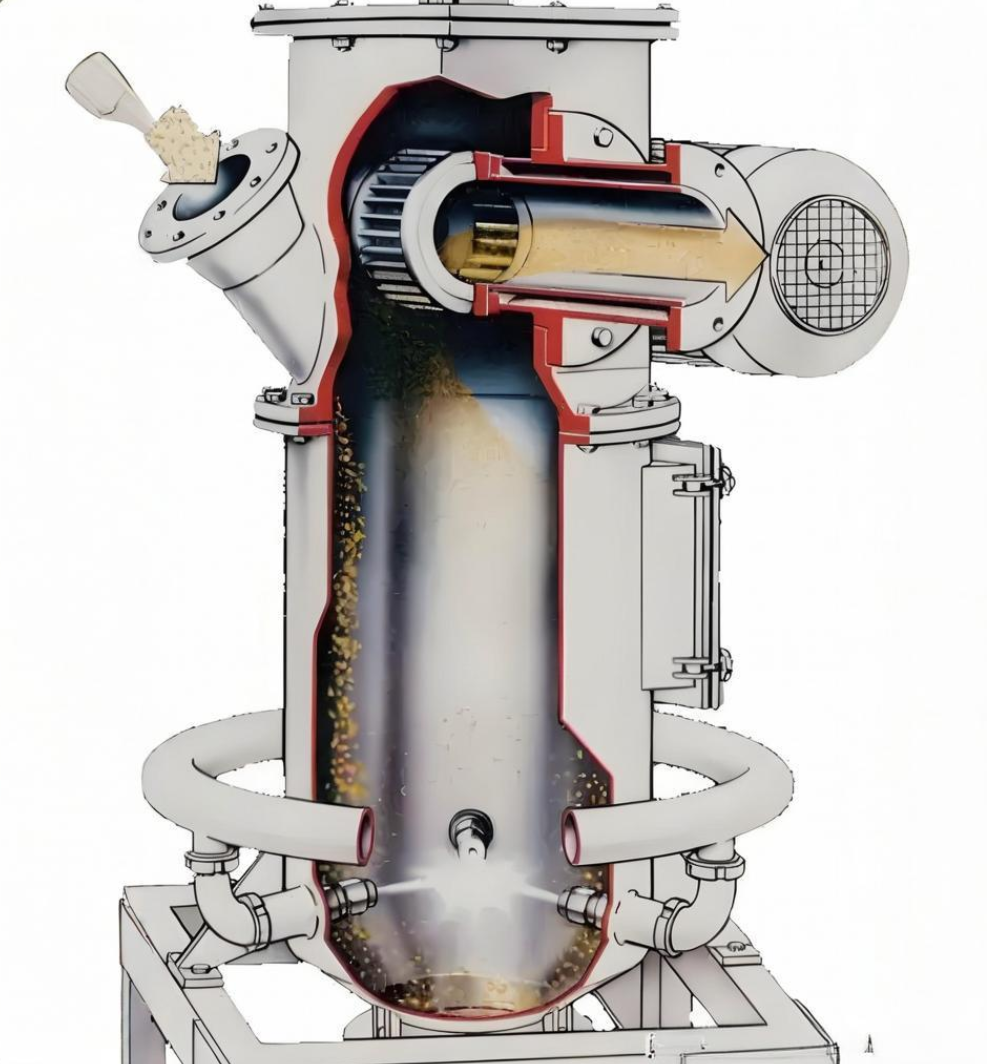
The working principle of a jet mill is based on particle acceleration and particle-to-particle impact.
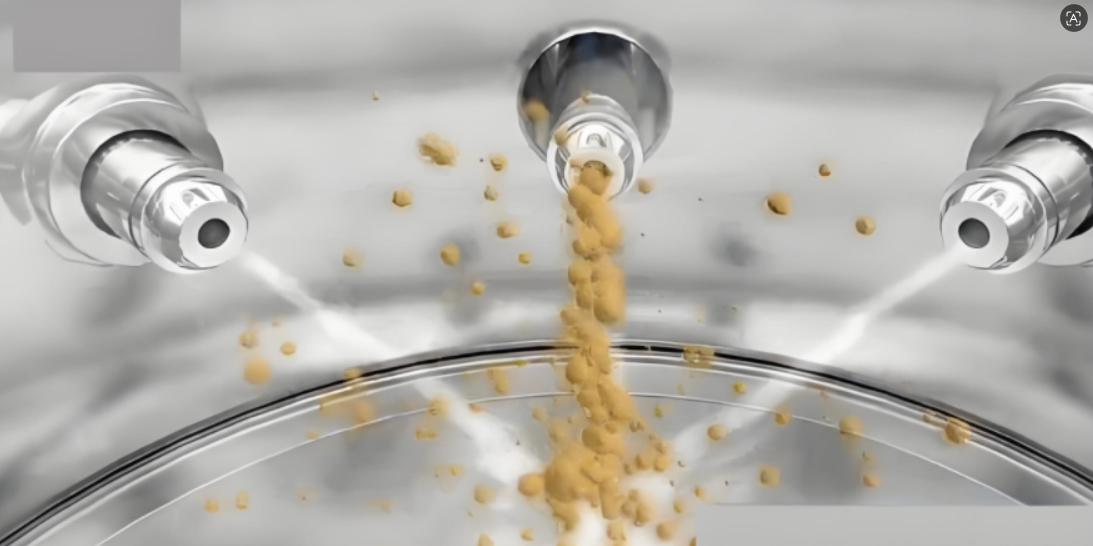
Compressed air enters the grinding chamber through specially designed nozzles.
The air expands rapidly and creates a high-velocity airflow.
Particles fed into the chamber are accelerated by this airflow and collide with each other.
These collisions generate sufficient energy to fracture the particles into finer sizes.
The smaller particles are then carried upward by the airflow and separated by an integrated classifier.
Oversized particles remain inside the grinding chamber until they are reduced to the required size.
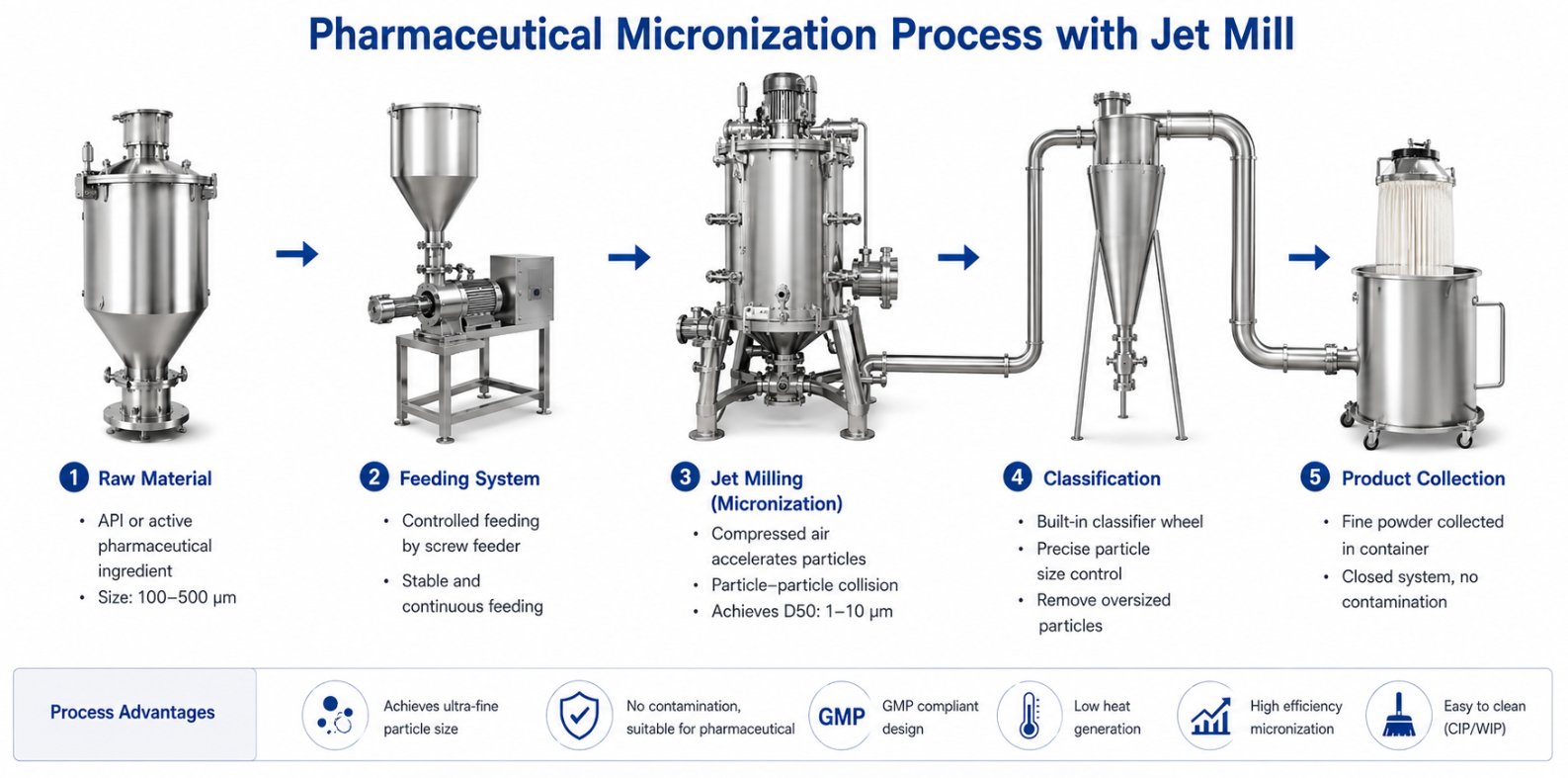
The process can be summarized as:
Feed Material → Acceleration by Compressed Air → Particle Collision → Size Reduction → Classification → Product Collection
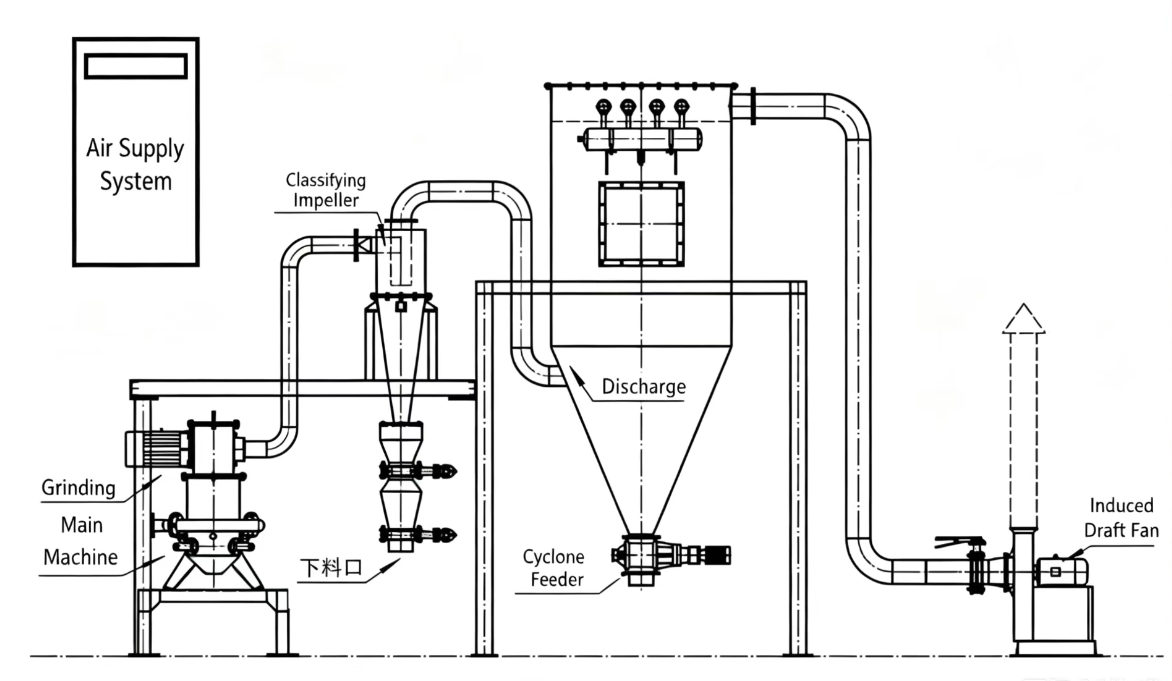
Main Components of a Jet Mill System
1. Feeding System
The feeding system introduces raw material into the grinding chamber at a controlled rate.
Stable feeding is essential for consistent particle size distribution.
2. Grinding Chamber
The grinding chamber is where particle acceleration and collision occur.
The chamber geometry significantly affects grinding efficiency.
3. Air Nozzles
High-pressure nozzles convert compressed air energy into particle acceleration.
The nozzle design directly influences grinding performance.
4. Classifier Wheel
The classifier controls the final particle size.
By adjusting classifier speed, operators can achieve different particle size distributions.
5. Cyclone and Dust Collector
Fine particles are separated from the airflow and collected as final product.
This ensures product recovery and environmental protection.
Why Does a Jet Mill Produce Ultra-Fine Powders?
Several factors contribute to the ultra-fine grinding capability of jet mills:
High Collision Velocity
Particle velocities can exceed several hundred meters per second.
Particle-to-Particle Grinding
No mechanical contact occurs between grinding tools and product.
Continuous Classification
Only particles meeting target size specifications leave the system.
Controlled Process Parameters
Operators can adjust:
Air pressure
Feed rate
Classifier speed
Gas type
to optimize product quality.
Advantages of Jet Milling Technology
Contamination-Free Grinding
No grinding media are used, reducing product contamination.
Excellent Particle Size Control
D50 values from 1–20 microns can be achieved.
Suitable for Heat-Sensitive Materials
The expansion of compressed gas creates a cooling effect during grinding.
Narrow Particle Size Distribution
Integrated classification improves product consistency.
GMP Compatibility
Jet mills are widely used in pharmaceutical manufacturing environments.
Typical Applications
Pharmaceutical Industry
API micronization
Inhalation drugs
Sterile powder production
Battery Materials
Lithium iron phosphate (LFP)
Cathode materials
Anode materials
Chemical Industry
Pigments
Catalysts
Fine chemicals
Food Industry
Flavor powders
Nutritional ingredients
Functional additives
Factors Affecting Jet Mill Performance
Several operating parameters influence final particle size:
Compressed Air Pressure
Higher pressure generally produces finer particles.
Feed Rate
Excessive feeding can reduce grinding efficiency.
Classifier Speed
Higher classifier speed results in finer products.
Material Properties
Hardness, density, and moisture content affect grinding behavior.
Frequently Asked Questions
What particle size can a jet mill achieve?
Most industrial jet mills can achieve D50 values between 1 and 10 microns.
Is a jet mill suitable for pharmaceutical applications?
Yes. Jet mills are widely used for API micronization and GMP production.
What is the difference between a jet mill and a ball mill?
A jet mill uses compressed air and particle collision, while a ball mill uses grinding media and mechanical impact.
Can heat-sensitive materials be processed?
Yes. Jet milling generates minimal heat and is suitable for temperature-sensitive products.
Conclusion
The jet mill working principle relies on high-speed particle collisions generated by compressed air or gas. This technology provides contamination-free ultra-fine grinding, precise particle size control, and excellent suitability for pharmaceutical, battery, chemical, and food applications.
As demand for micronized powders continues to grow, jet milling remains one of the most effective solutions for achieving consistent ultra-fine particle size distributions.