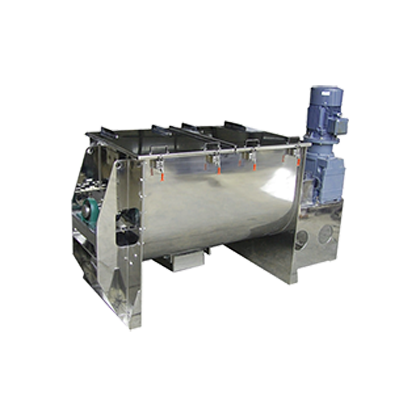
ZGH Series Industrial High Intensity Mixer
Intensive Mixing and High-Speed Dispersion for Industrial Powder Processing
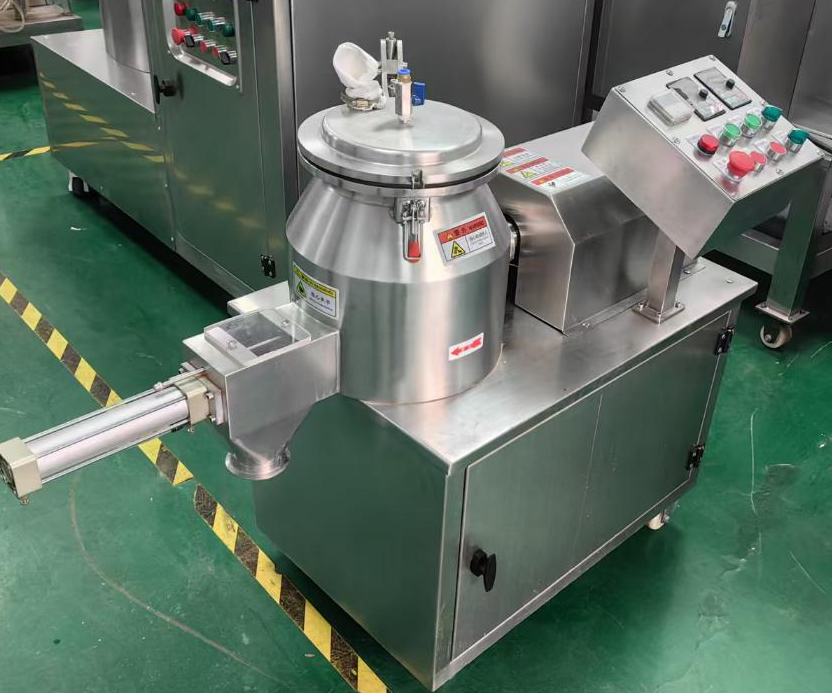
The JETER ZGH Series High Intensity Mixer is designed for batch processing applications that require intensive powder mixing and high-speed dispersion. It combines a main mixing system with a separate high-speed dispersing system, allowing the two mechanisms to perform different functions within the same mixing vessel.
During operation, the main mixing blades promote material circulation throughout the vessel, while the high-speed dispersing blades provide additional localized mixing action. This combination helps distribute ingredients, disperse suitable agglomerates and improve the consistency of the processed batch.
The ZGH Series is available in seven models, with nominal vessel volumes ranging from 10 L to 850 L and listed processing capacities from 3 kg/h to 400 kg/h.
Each model features a two-speed main mixing motor and a high-speed dispersing system operating at 1,500 or 3,000 rpm. The equipment can be selected according to material properties, batch requirements and the intended mixing process.
JETER provides industrial powder processing equipment for customers in the chemical, food, feed, ceramic, pharmaceutical and advanced materials industries.
Key Features of the ZGH High Intensity Mixer
1. Combined Mixing and Dispersing Systems
The ZGH mixer uses two separate working mechanisms:
Main mixing blades for material circulation and batch mixing.
High-speed dispersing blades for localized high-speed dispersion.
The combination allows mixing and dispersion to take place within one machine, reducing the need for separate processing steps in suitable applications.
2. Two-Speed Main Mixing Motor
The main mixing system is equipped with a two-speed motor.
Each model has two specified mixing speeds, allowing the operator to select the appropriate speed according to the material and process requirements.
The two-speed configuration provides different operating conditions without treating the main mixing system as a continuously variable-speed drive.
3. High-Speed Dispersing System
The dispersing system operates at 1,500 / 3,000 rpm across the ZGH series.
It provides additional mechanical action to help disperse localized material accumulations and improve ingredient distribution.
The actual dispersion effect depends on the material's particle characteristics, cohesion and operating conditions.
4. Seven Models for Different Production Requirements
The ZGH series covers nominal vessel volumes from 10 L to 850 L.
This range allows equipment selection for different batch sizes and production requirements, from smaller-scale processing to larger industrial applications.
5. Separate Mixing and Dispersing Power Configurations
The main mixing system and dispersing system have separate motor power specifications.
This allows the power requirements of the two working mechanisms to be considered independently during equipment selection.
6. Application-Based Equipment Selection
The appropriate model depends on more than nominal vessel volume.
Material bulk density, flowability, particle size, batch weight, mixing time and the required dispersion result should all be considered before confirming the final configuration.
Working Principle of the High Intensity Mixer
The ZGH Series operates through the coordinated action of its main mixing system and high-speed dispersing system.
Main Mixing Process
Raw materials are loaded into the mixing vessel according to the specified batch formulation.
The main mixing blades generate material movement within the vessel and promote circulation along the vessel wall. This repeated movement brings different portions of the batch into contact during the mixing process.
The main mixing motor provides two selectable operating speeds, allowing the mixing conditions to be adjusted according to the process requirements.
High-Speed Dispersion Process
The dispersing blades operate at 1,500 or 3,000 rpm.
Their high-speed action provides additional localized mechanical interaction with the material. This helps disperse suitable agglomerates and distribute ingredients that may otherwise remain concentrated in particular areas of the batch.
The dispersing mechanism is intended for mixing and dispersion rather than serving as a replacement for a dedicated grinding machine.
Combined Mixing and Dispersion
The two systems work within the same vessel to support the overall processing operation.
The main mixing mechanism promotes bulk material circulation, while the dispersing mechanism provides additional localized action.
The operating conditions and processing time should be established according to the material and the required final product characteristics.
Discharge
After the batch reaches the required processing condition, the finished material is discharged for subsequent production stages.
The discharge arrangement should be confirmed according to the material's flow characteristics and the customer's production layout.
Main Components and Their Functions
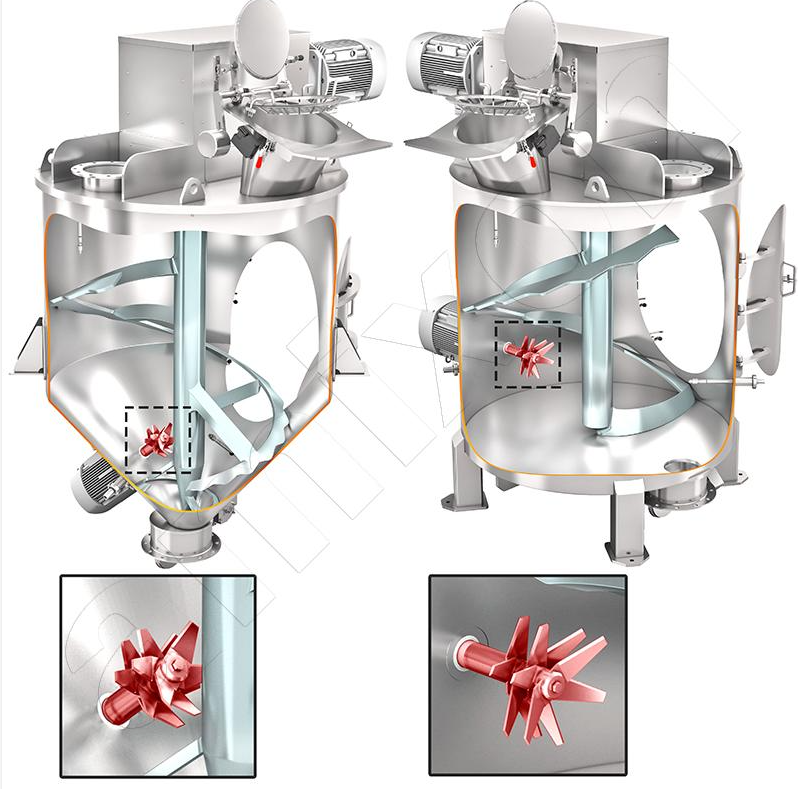
Mixing Vessel
The vessel provides the enclosed processing space for batch mixing and dispersion.
Its volume determines the nominal equipment size, while the actual working volume should be selected according to the material and required loading level.
Main Mixing Assembly
The main mixing assembly is responsible for bulk material movement and circulation.
It is driven by a two-speed motor, with the available mixing speeds varying according to the selected ZGH model.
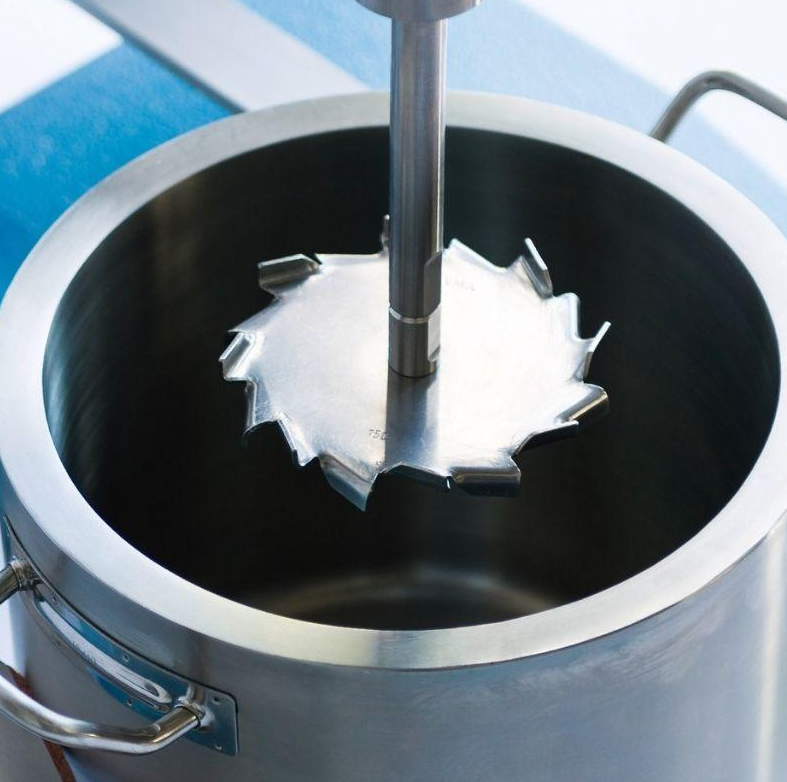
High-Speed Dispersing Assembly
The dispersing assembly provides localized high-speed mechanical action.
Its operating speed is specified as 1,500 / 3,000 rpm across the ZGH series.
Drive Systems
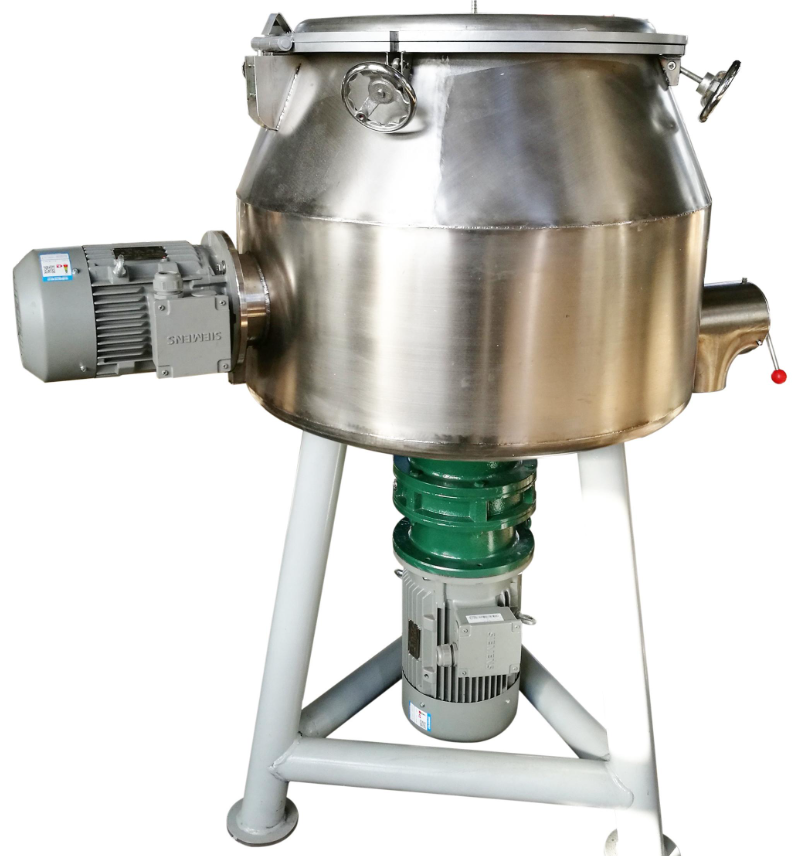
The main mixing and dispersing mechanisms have separate drive power specifications.
The corresponding motor power configurations are listed in the technical specification table below.
Discharge and Control Arrangements
The discharge and control configurations should be selected according to the material characteristics, operating requirements and downstream equipment.
The final arrangement can be discussed during the equipment selection and quotation process.
Industrial Applications
The ZGH High Intensity Mixer can be evaluated for applications where conventional powder blending alone may not provide the required degree of material distribution or dispersion.
Typical application areas include:
Chemical Industry
Specialty chemical powders
Chemical additives
Functional powder formulations
Selected solid-liquid mixtures
Industrial chemical ingredients
Food and Feed Industry
Food ingredient blends
Powdered additives
Feed ingredients
Nutritional powder formulations
Ceramic and Advanced Materials
Ceramic raw material mixtures
Inorganic powder formulations
Mineral-based materials
Selected functional material blends
Pharmaceutical and Biomedical Materials
Selected pharmaceutical intermediates
Powder formulations requiring intensive mixing
Material systems requiring controlled ingredient distribution
Building Materials and Coatings
Powdered building material ingredients
Coating raw materials
Selected mineral-based formulations
Functional additive mixtures
Electronics and Non-Metallic Minerals
Selected electronic material formulations
Non-metallic mineral powders
Specialty inorganic materials
Material suitability: High-intensity mixing and dispersion can introduce mechanical shear and heat. Materials with fragile crystals, strict particle morphology requirements or temperature sensitivity should be evaluated before selecting this equipment. Laboratory or production trials may be necessary to establish suitable operating conditions.
ZGH Series High Intensity Mixer – Technical Specifications
The ZGH Series includes seven models with different vessel volumes, processing capacities and motor configurations.
The main mixing system uses a two-speed motor, while the dispersing system has a specified operating speed of 1,500 / 3,000 rpm throughout the series.
Model and Technical Data
| Model | Volume (L) | Capacity (kg/h) | Mixing Speed (rpm) | Dispersing Speed (rpm) | Mixing Power (kW) | Dispersing Power (kW) | Air Consumption (m³/min) | Weight (kg) |
|---|---|---|---|---|---|---|---|---|
| ZGH-10 | 10 | 3 | 300/600 | 1500/3000 | 1.5/2.2 | 0.85/1.1 | 0.6 | 120 |
| ZGH-50 | 50 | 15 | 200/400 | 1500/3000 | 4/5.5 | 1.3/1.8 | 0.6 | 150 |
| ZGH-150 | 150 | 50 | 180/270 | 1500/3000 | 6.5/8 | 2.4/3 | 0.9 | 200 |
| ZGH-200 | 200 | 100 | 180/270 | 1500/3000 | 9/11 | 4.5/5.5 | 0.9 | 400 |
| ZGH-350 | 350 | 150 | 140/220 | 1500/3000 | 9/11 | 4.5/5.5 | 0.9 | 600 |
| ZGH-400 | 400 | 200 | 106/155 | 1500/3000 | 13/16 | 6.5/8 | 1.1 | 700 |
| ZGH-850 | 850 | 400 | 106/155 | 1500/3000 | 18.5/22 | 9/11 | 1.5 | 1,100 |
Technical Notes
Vessel volume refers to the nominal volume of the mixing vessel.
The listed processing capacity is expressed in kg/h. Actual capacity depends on material properties and process conditions.
Mixing speed values represent the two operating speeds of the main mixing motor.
Dispersing speed is 1,500 / 3,000 rpm across the ZGH series.
Mixing power and dispersing power refer to their respective motor configurations.
Air consumption is specified according to the original model data.
Equipment weight is based on the supplied technical specifications.
Final equipment details should be confirmed against the selected model and project requirements.
How to Select the Right ZGH Mixer Model
Selecting a high intensity mixer requires an understanding of both the production target and the material's behavior during processing.
1. Determine the Required Batch Size
Start with the required material weight per batch or the expected hourly production capacity.
The nominal vessel volume alone does not determine the actual batch weight. Material bulk density and the appropriate loading level must also be considered.
2. Evaluate Material Characteristics
Provide the material name, bulk density, particle size, moisture content and flowability.
These factors influence material circulation, mixing time and the effectiveness of the dispersing system.
3. Define the Mixing Objective
Clarify whether the process requires general powder mixing, distribution of minor ingredients, dispersion of agglomerates or incorporation of liquid ingredients.
The required result will influence the operating conditions and equipment configuration.
4. Consider Particle Sensitivity
For fragile particles or materials sensitive to shear and temperature, the effect of high-speed dispersion should be evaluated carefully.
The selected mixing conditions should achieve the required distribution without causing unwanted changes to the material.
5. Confirm Utility Requirements
The listed air consumption, motor power and installation requirements should be checked against the available factory utilities.
This is particularly important when integrating the mixer into an existing production line.
High Intensity Mixer vs. Ribbon Blender
Both high intensity mixers and ribbon blenders are used in industrial powder processing, but their mixing mechanisms and typical process objectives differ.
| Comparison | ZGH High Intensity Mixer | Ribbon Blender |
|---|---|---|
| Main Mechanism | Main mixing system plus high-speed dispersing system | Inner and outer ribbon mixing |
| Material Movement | Bulk circulation with additional localized dispersion | Axial and radial powder movement |
| Mixing Action | Intensive mixing and high-speed dispersion | General-purpose powder blending |
| Dispersing System | Separate high-speed dispersing assembly | Not included in a conventional ribbon configuration |
| Liquid Addition | Can be evaluated for suitable formulations | Depends on liquid properties and mixer configuration |
| Typical Application | Processes requiring intensive mixing and dispersion | Routine blending of dry powders and granules |
The ZGH series may be more suitable when the process requires additional high-speed dispersion.
A ribbon blender may be a more practical choice for conventional dry powder blending where a simpler mixing mechanism meets the process requirements.
The final selection should be based on the material, required mixing result and production conditions.
Integration into a Complete Powder Processing Line
The ZGH High Intensity Mixer can be used as an individual processing machine or integrated into a larger powder processing system.
Depending on the production process, it may be connected with:
Raw material feeding and weighing systems
Powder conveying equipment
Jet mills and air classifiers
Screening equipment
Granulation systems
Drying equipment
Storage silos and packaging systems
Automated batch control systems
When designing a complete production line, equipment capacity, material transfer, batch sequence and process control should be coordinated to ensure smooth operation between different production stages.
JETER provides powder processing equipment and engineering solutions for individual machines as well as integrated production systems.
Frequently Asked Questions
What is a high intensity mixer used for?
A high intensity mixer is used for batch processing applications requiring intensive material mixing and additional dispersion. The ZGH series combines a main mixing system with a separate high-speed dispersing system.
What is the difference between the mixing speed and dispersing speed?
The mixing speed refers to the two operating speeds of the main mixing motor. The dispersing speed refers to the separate high-speed dispersing mechanism.
For the ZGH series, mixing speeds vary by model, while dispersing speed is specified at 1,500 / 3,000 rpm.
Does the ZGH mixer have a variable-speed motor?
The main mixing system is equipped with a two-speed motor. The listed speed pairs represent two operating speeds, not a continuously variable-speed range.
What is the capacity range of the ZGH series?
The listed processing capacities range from 3 kg/h for the ZGH-10 to 400 kg/h for the ZGH-850. Actual capacity depends on material bulk density, flow characteristics and operating conditions.
Can a high intensity mixer handle powder and liquid materials?
The equipment can be evaluated for selected solid-liquid mixing applications. Suitability depends on liquid viscosity, addition rate, powder characteristics and the required final product condition.
Can a high intensity mixer replace a grinding machine?
No. The dispersing system provides localized high-speed mechanical action and can help disperse suitable agglomerates. It should not be regarded as a substitute for a dedicated grinding machine when controlled particle-size reduction is required.
How do I choose between ZGH-200 and ZGH-350?
The ZGH-200 has a nominal vessel volume of 200 L and a listed capacity of 100 kg/h. The ZGH-350 has a nominal vessel volume of 350 L and a listed capacity of 150 kg/h.
The correct choice depends on the required production rate, material bulk density, batch size and process conditions.
Can JETER customize the mixer configuration?
Equipment configuration can be discussed according to the material, production requirements, material-contact requirements, utility conditions and integration needs. Final customization options should be confirmed with JETER's engineering team.
Request a High Intensity Mixer Quotation
Choosing the right mixer starts with understanding the material and the required production result.
JETER can help evaluate the appropriate ZGH model based on your material properties, processing capacity and mixing requirements.
To receive a more accurate equipment recommendation, please share the following information:
Material name and application
Bulk density (kg/m³)
Particle size range
Required processing capacity (kg/h)
Required batch size
Moisture content, if applicable
Mixing and dispersion requirements
Material-contact requirements
Available factory utilities
Any special installation or production requirements
Contact JETER to discuss your high intensity mixing project and request a technical proposal.
Website: https://www.shjeter.com/
Email: [email protected]
WhatsApp: +86 187 1788 3822