Oscillating Granulator
YK Series Oscillating Granulator
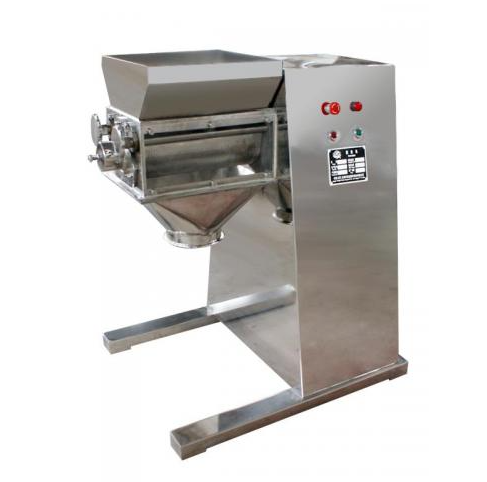
Reliable Granule Formation and Size Reduction for Wet and Dry Materials
The JETER YK Series Oscillating Granulator is designed for processing moist powder mixtures into granules and reducing dry agglomerates into smaller, more manageable particles.
The machine uses an oscillating rotor to move material against a screen. During operation, the rotor repeatedly presses and guides the material through the screen openings. Wet powder masses are formed into granules, while suitable dry lumps can be broken down and screened to a more consistent size.
This mechanical granulation method is commonly used in pharmaceutical, chemical and food processing operations where controlled granule formation or sizing is required.
The YK Series includes six models, from YK-60 to YK-400, with different listed capacities, drive powers and machine dimensions. The appropriate model should be selected according to the material properties, required throughput and desired granule characteristics.
JETER provides oscillating granulation equipment for individual production processes and integrated powder processing lines.
Key Features of the YK Series Oscillating Granulator
1. Oscillating Granulation Mechanism
The oscillating rotor moves back and forth against the screen, applying mechanical pressure to the material.
This action helps force suitable wet powder mixtures through the screen openings to form granules. It can also be used to break down dry agglomerates into smaller particles.
2. Controlled Granule Sizing
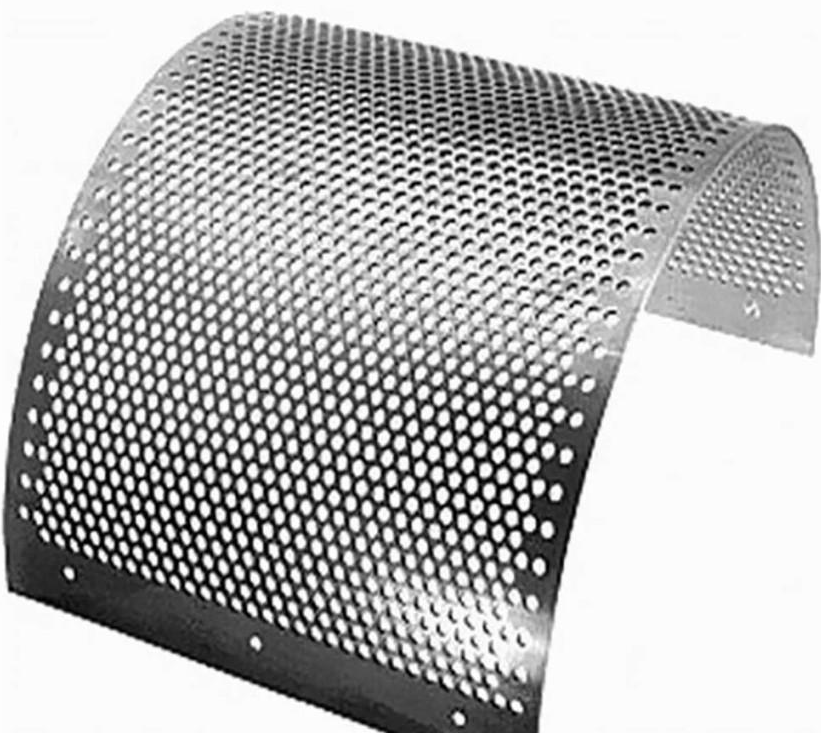
The screen opening is an important factor affecting the size of the discharged granules.
A suitable screen should be selected according to the material condition, target granule size and required production rate. The actual particle-size distribution also depends on material properties and operating conditions.
3. Suitable for Wet and Dry Material Processing
The YK Series can be used for two common operations:
Wet granulation: processing moist powder mixtures into granules.
Dry sizing: breaking down suitable dried lumps or agglomerates into smaller particles.
The material must have suitable mechanical properties for the selected operation. Very sticky, elastic or highly abrasive materials may require a process assessment before equipment selection.
4. Stainless Steel Material-Contact Construction
The material-contact parts are made of stainless steel, providing a suitable surface for powder processing and routine cleaning.
The required stainless steel grade, surface finish and construction details should be confirmed according to the material and production standards.
5. Multiple Models for Different Production Requirements
The YK Series covers six models: YK-60, YK-100, YK-160, YK-250, YK-320 and YK-400.
The range offers different listed capacities, motor powers and machine dimensions to support different production requirements.
6. Compact Mechanical Structure
The oscillating granulation mechanism provides a straightforward way to process suitable wet masses and dry agglomerates.
The equipment can be incorporated into a production process before drying, after drying or between other powder-processing operations, depending on the material and process sequence.
What Is an Oscillating Granulator?
An oscillating granulator is a mechanical screening and granulation machine used to form granules from moist powder mixtures or to reduce dried lumps into smaller particles.
Unlike a high-speed impact mill, an oscillating granulator works by repeatedly moving a rotor against a screen. The material is pressed and guided through the openings of the screen rather than being primarily reduced by high-speed impact.
This makes the equipment suitable for applications where the objective is to form granules from a prepared wet mass or to size-reduce suitable dry agglomerates.
An oscillating granulator is commonly considered when:
A wet powder mixture needs to be converted into granules before drying.
Dried material has formed lumps that need to be broken down.
A more controlled granule size is required through screen selection.
A mechanical granulation step is needed within a batch or continuous production process.
The suitability of the process depends on the material's moisture content, cohesion, flow behavior, hardness and required final particle size.
Working Principle of the Oscillating Granulator
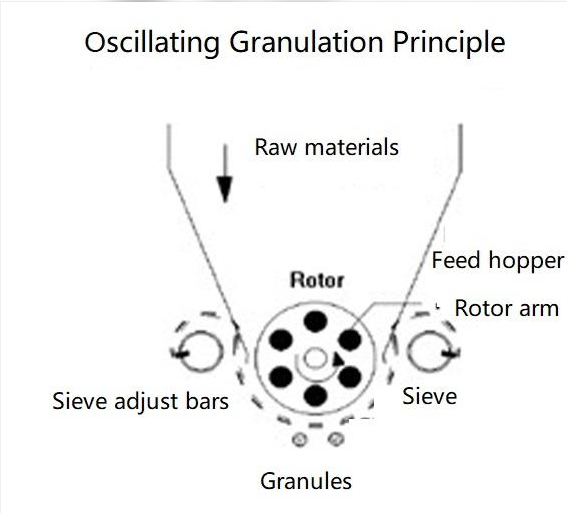
The YK Series uses an oscillating rotor and a screen to process the incoming material.
Step 1: Material Feeding
The prepared wet powder mass or suitable dry agglomerates are fed into the machine through the feed inlet.
The material should be prepared to a condition suitable for the selected granulation or sizing operation.
Step 2: Oscillating Rotor Movement
The drive system moves the rotor through its designed oscillating motion.
As the rotor moves, it repeatedly pushes the material against the screen surface.
Step 3: Material Passing Through the Screen
For wet granulation, the mechanical pressure guides the moist material through the screen openings, forming granules.
For dry sizing, suitable lumps are broken down as the material is pressed and moved through the screen.
Step 4: Granule Discharge
The processed granules pass through the screen and are discharged from the machine for collection or transfer to the next process.
Step 5: Downstream Processing
Depending on the production sequence, the granules may be transferred to a fluid bed dryer, tray dryer, screening machine, mixer or packaging system.
For wet granulation, drying is often required after the granules have been formed.
Main Components of an Oscillating Granulator
The exact construction may vary according to the model and selected configuration. The main functional sections generally include the following:
Feed Hopper
The feed hopper directs the prepared material into the granulation chamber.
Its size and arrangement should suit the material's flow characteristics and the required feeding method.
Oscillating Rotor
The rotor moves against the screen to press and guide the material through the openings.
Its diameter and operating speed are important equipment parameters and vary by model.
Screen Assembly
The screen supports the granulation and sizing process. Its opening size influences the size of material passing through the machine.
Screen material, opening size and fixing arrangement should be selected according to the product requirements and material characteristics.
Drive and Transmission System
The drive system supplies the mechanical movement required for the oscillating rotor.
Motor power and operating speed vary according to the selected model.
Discharge Outlet
The processed granules leave the machine through the discharge section and can be collected in a suitable container or transferred to downstream equipment.
Machine Frame and Contact Surfaces
The machine frame supports the drive and processing assembly. Material-contact parts are made of stainless steel according to the current product information.
The required material grade and surface finish should be confirmed for each project.
Typical Applications of the YK Series
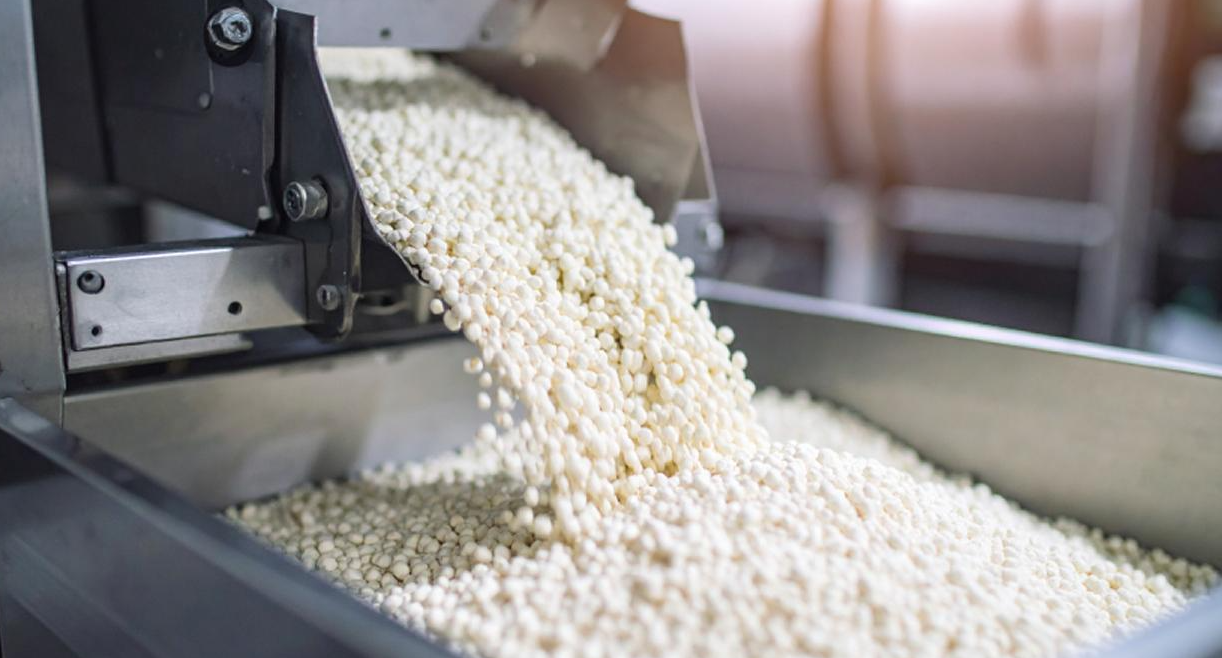
The YK Series can be considered for wet granulation and dry agglomerate sizing in several industries.
Pharmaceutical Industry
Potential applications include:
Wet powder mixtures prepared for tablet production
Pharmaceutical intermediate granules
Suitable excipient mixtures
Granule sizing after drying
The granulator may be used before a drying stage or for sizing dried material, depending on the manufacturing process.
For pharmaceutical production, the material-contact construction, cleaning access, screen specification and contamination-control requirements should be reviewed against the customer's quality standards.
Chemical Industry
Potential applications include:
Chemical powder mixtures
Suitable moist chemical masses
Dry chemical agglomerates
Intermediate material sizing
For abrasive, corrosive or chemically reactive materials, material compatibility and wear resistance should be assessed before selecting the machine configuration.
Food Industry
Potential applications include:
Suitable food powder mixtures
Moist food ingredient masses
Dry food ingredient agglomerates
Granule sizing before further processing
The contact material, cleaning procedure and hygiene requirements should be matched to the intended food application.
YK Series Oscillating Granulator – Technical Specifications
The JETER YK Series Oscillating Granulator is available in six models to accommodate different material processing capacities and production requirements.
Model and Technical Data
| Model | Capacity (kg/h) | Power (kW) | Oscillating Speed (r/min) | Oscillating Degree | Roller Diameter (mm) | Dimensions (mm) |
|---|---|---|---|---|---|---|
| YK-60 | 1–15 | 0.55 | 46 | 360° | 60 | 460 × 550 × 570 |
| YK-100 | 30–200 | 0.75 | 55 | 360° | 100 | 700 × 400 × 1050 |
| YK-160 | 100–300 | 3 | 55 | 360° | 160 | 1000 × 800 × 1300 |
| YK-250 | 220–550 | 5.5 | 55 | 360° | 250 | 1300 × 920 × 1500 |
| YK-320 | 300–800 | 11 | 40 | 360° | 320 | 1550 × 800 × 1550 |
| YK-400 | 500–1500 | 18 | 35 | 360° | 400 | 2200 × 900 × 1550 |
Technical Notes
Capacity is expressed in kilograms per hour (kg/h). Actual throughput depends on material properties, moisture content, screen opening, feeding conditions and required granule quality.
Roller diameter refers to the diameter of the oscillating roller.
Oscillating speed and oscillating degree are based on the supplied YK Series specifications.
Dimensions are listed as length × width × height in millimeters.
Material-contact parts are made of stainless steel. The required stainless steel grade and surface finish should be confirmed according to the application.
Final equipment performance and configuration should be confirmed according to the material and production requirements.
How to Select the Right Oscillating Granulator
Choosing an oscillating granulator requires more than matching the model to a nominal capacity. The material condition and intended process are equally important.
1. Identify the Processing Objective
First determine whether the machine will be used for wet granulation or dry agglomerate sizing.
Wet powder mixtures and dried lumps behave differently during processing and may require different screen and operating arrangements.
2. Provide Material Information
Useful information includes:
Material name and composition
Moisture content
Bulk density
Particle size before processing
Cohesiveness and flow behavior
Hardness or tendency to form lumps
Whether the material is abrasive or corrosive
These details help determine whether an oscillating granulator is suitable for the application.
3. Define the Required Granule Size
The target granule size should be specified before selecting the screen.
Screen opening is one of the main factors affecting the size of the discharged material. However, the final size distribution also depends on the material condition and operating parameters.
4. Confirm the Required Throughput
Estimate the amount of material to be processed per hour or per batch.
The capacity figures in the model table must be interpreted using the confirmed capacity basis. A material trial or process evaluation is recommended when the production target is critical.
5. Check the Downstream Process
For wet granulation, consider the next drying stage and the transfer method between machines.
For dry sizing, consider whether the granules will be screened, blended, conveyed or packaged after processing.
6. Confirm Contact Materials and Cleaning Requirements
For pharmaceutical, food and specialty chemical applications, confirm the required stainless steel grade, surface finish, screen material and cleaning method.
The final construction should match the customer's process and hygiene requirements.
Oscillating Granulator vs. Other Granulation Equipment
Different granulation technologies perform different processing tasks. The right choice depends on the initial material condition and the desired product form.
| Equipment | Main Processing Principle | Typical Feed | Main Purpose |
|---|---|---|---|
| Oscillating Granulator | Oscillating rotor presses material through a screen | Moist powder mass or suitable dry lumps | Wet granulation or dry sizing |
| Rotary Granulator | Rotating granulation mechanism | Suitable moist or prepared material, depending on design | Granule formation |
| Fluid Bed Granulator | Spraying binder onto fluidized powder particles | Powder and binder liquid | Granule formation and growth |
| Dry Granulator / Roller Compactor | Mechanical compaction followed by sizing | Dry powder | Granulation without liquid binder |
An oscillating granulator should not be confused with a roller compactor or a fluid bed granulator. These machines use different processing principles and are selected for different material conditions.
Integration into a Complete Granulation Line
An oscillating granulator can operate as an individual machine or as part of a larger powder processing line.
For a typical wet granulation process, the equipment may be arranged as follows:
Powder Mixing → Wet Mass Preparation → Oscillating Granulation → Drying → Screening → Final Blending → Packaging
Depending on the process, the granulator may be integrated with:
Powder mixers
Liquid preparation and dosing systems
Fluid bed dryers
Hot air dryers
Screening machines
Conveying and collection systems
Final blending and packaging equipment
The process sequence should be determined according to the material formulation, drying requirements, granule specifications and production capacity.
JETER can provide individual powder processing machines and coordinated equipment solutions for different production requirements.
Frequently Asked Questions
What is an oscillating granulator used for?
An oscillating granulator is used to form granules from suitable moist powder mixtures or to break down dried lumps into smaller particles through an oscillating rotor and screen.
Can an oscillating granulator process both wet and dry materials?
Yes. It can be used for wet granulation and for sizing suitable dry agglomerates. Material suitability depends on moisture content, cohesion, hardness and other physical properties.
How is the granule size controlled?
The screen opening is a key factor affecting the size of the discharged granules. The final particle-size distribution also depends on the material and operating conditions.
Is an oscillating granulator a drying machine?
No. Its main function is granulation or sizing. Wet granules normally require a separate drying process if the final product must have a controlled low moisture content.
What is the difference between an oscillating granulator and a high-speed mill?
An oscillating granulator uses a reciprocating rotor to press material through a screen. A high-speed mill generally uses faster rotating working elements to reduce particle size through impact, cutting or other mechanisms.
Which industries use oscillating granulators?
They are commonly used in pharmaceutical, chemical and food processing applications where suitable wet powder mixtures need to be granulated or dry agglomerates need to be sized.
What information is needed for a quotation?
To help select a suitable model, please provide:
Material name and application
Wet or dry processing requirement
Moisture content and bulk density
Required granule size
Required throughput and whether it is per hour or per batch
Contact material and cleaning requirements
Available installation space
A material sample or process description can help improve the accuracy of the equipment recommendation.
Contact JETER for an Oscillating Granulator Solution
Looking for an oscillating granulator for wet powder granulation or dry agglomerate sizing?
JETER can help review your material characteristics, granule size requirements and production conditions to identify a suitable YK Series configuration.
Email: [email protected]
WhatsApp: +86 187 1788 3822
Send us your material details and processing requirements to discuss your granulation project.