Industrial Hot Air Tray Dryer for Powder and Granule Drying
JETER Industrial Hot Air Dryers are designed for batch drying of powders, granules, and other materials that require controlled heating and moisture removal.
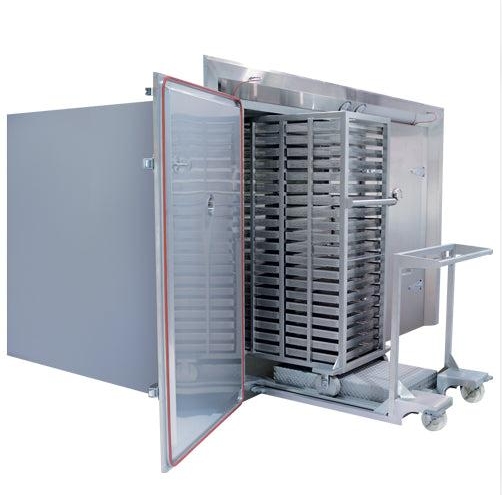
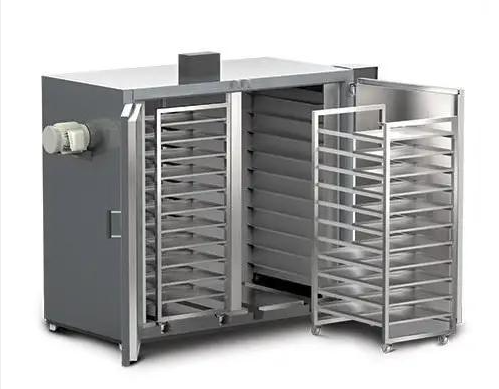
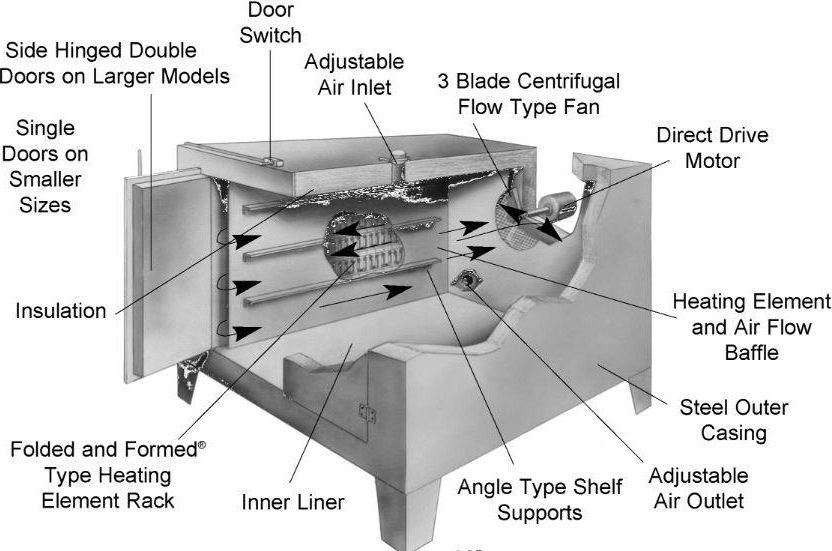
Using a hot-air circulation system, the dryer transfers heat to the material through controlled airflow inside an enclosed drying chamber. Materials are distributed across trays, allowing hot air to circulate around the loaded material and support moisture evaporation.
The GT and CT-C series provide different chamber capacities, tray arrangements, trolley configurations, and airflow specifications to accommodate different production requirements.
Depending on the material and process conditions, the equipment can be configured with electric or steam heating. Stainless steel construction options are also available for applications with specific material-contact and hygiene requirements.
Whether used for pharmaceutical intermediates, food ingredients, or industrial chemical materials, selecting the right hot air dryer starts with understanding the material, batch size, moisture content, and required drying conditions.
Key Features of JETER Hot Air Dryer
Controlled Hot-Air Circulation: Circulating heated air supports heat transfer throughout the drying chamber.
Batch Drying Design: Tray-based loading allows different materials to be processed in individual batches.
Multiple Capacity Options: GT and CT-C models cover listed batch capacities from 50 kg to 400 kg.
Flexible Tray Configuration: Different models are available with varying tray quantities and trolley arrangements.
Heating Options: Electric and steam heating configurations can be considered according to process requirements.
Temperature Control: The drying temperature can be adjusted to suit the thermal characteristics of the material.
Application Flexibility: Suitable for selected powders, granules, ingredients, and other compatible materials.
Working Principle of an Industrial Hot Air Dryer
A hot air tray dryer operates by circulating heated air through an enclosed drying chamber.
The material is loaded onto trays and arranged inside the chamber. Heated air passes through the drying space and transfers thermal energy to the material. Moisture evaporates from the material surface and, depending on the drying conditions, from its internal structure.
The moisture-laden air is then partially or continuously exhausted according to the system configuration, while the remaining air may be recirculated and reheated.
The drying process generally involves the following stages:
1. Material Loading
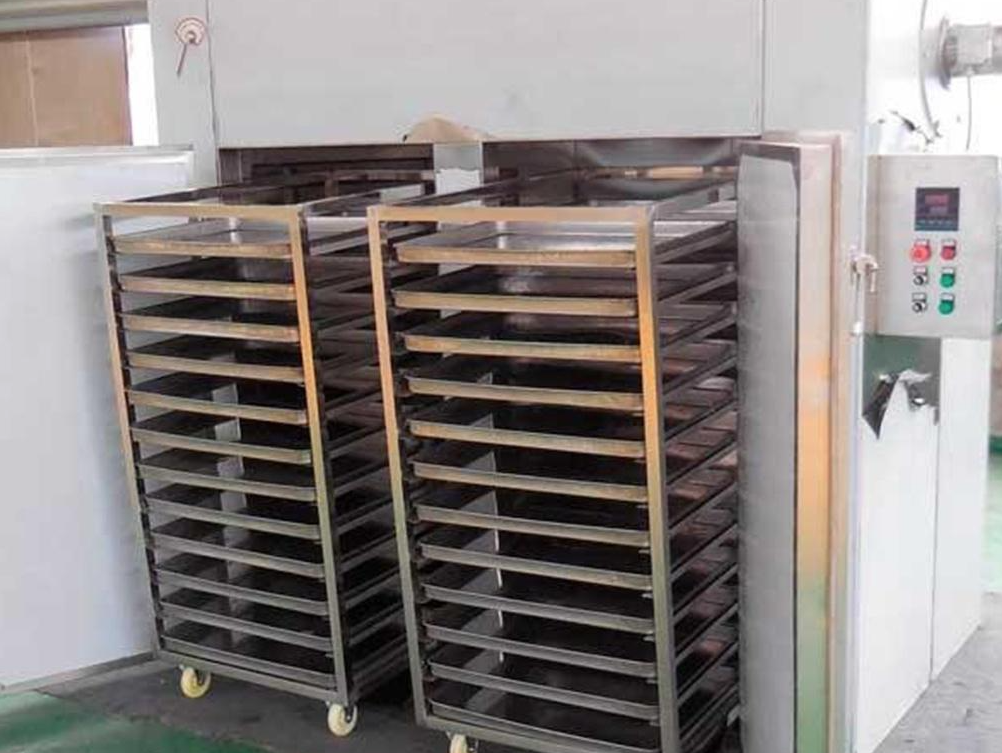
The material is distributed across stainless steel or other suitable trays.
The loading thickness and distribution should be selected according to the material's physical properties and drying requirements.
2. Air Heating
Air is heated through the selected heating arrangement, such as electric heating or steam heating.
The required temperature depends on the material's thermal stability and moisture removal requirements.
3. Hot-Air Circulation
The circulation fan moves heated air through the drying chamber.
Airflow distribution is important because differences in airflow, material loading and tray positioning can affect drying consistency.
4. Moisture Evaporation
Heat transfers from the circulating air to the material, causing moisture to evaporate.
Drying time depends on the initial moisture content, required final moisture level, material thickness, loading quantity and operating temperature.
5. Drying Completion and Unloading
After the required drying conditions have been achieved, the material is removed from the trays for subsequent processing, cooling, screening or packaging.
The actual drying endpoint should be determined according to the product's moisture specification rather than relying on a fixed cycle time alone.
GT and CT-C Series Hot Air Dryers
JETER provides two series of hot air tray drying equipment: GT Series and CT-C Series.
Both series are available in different batch capacities and chamber configurations.
The appropriate model should be selected according to the material, batch weight, available installation space and required production cycle.
GT Series Hot Air Dryer
The GT Series is available in five standard models, with batch capacities ranging from 50 kg to 400 kg.
The models differ in heat dissipation area, steam consumption, electrical heating power, fan airflow, tray quantity and trolley configuration.
CT-C Series Hot Air Circulation Dryer
The CT-C Series offers different chamber sizes and airflow configurations for batch drying applications.
Depending on the selected model, the equipment can be supplied with different tray arrangements and circulation fan configurations.
The GT and CT-C series should be evaluated according to the actual drying process rather than selected by batch capacity alone.
Technical Specifications
GT Series Technical Data
| Model | Batch Capacity (kg/batch) | Heat Dissipation Area (m²) | Steam Consumption (kg/h) | Electric Heating (kW) | Fan Airflow (m³/h) | Fan Power (kW) | Temperature Data | Trays | Trolleys | Dimensions (mm) |
|---|---|---|---|---|---|---|---|---|---|---|
| GT-0 | 50 | 15 | 15 | 6–9 | 1,417 | 1.1 | ±2 | 24 | 1 | 1600 × 1050 × 2100 |
| GT-I | 100 | 20 | 20 | 15 | 1,417 | 1.1 | ±2 | 48 | 2 | 2430 × 1200 × 2375 |
| GT-II | 200 | 40 | 40 | 30 | 5,230 | 1.1 | ±2 | 96 | 4 | 2430 × 2200 × 2433 |
| GT-III | 300 | 80 | 60 | 45 | 9,800 | 2.2 | ±2 | 144 | 6 | 3430 × 2200 × 2620 |
| GT-IV | 400 | 100 | 80 | 60 | 9,800 | 2.2 | ±2 | 192 | 8 | 4380 × 2200 × 2620 |
CT-C Series Technical Data
| Model | Batch Capacity (kg/batch) | Heat Dissipation Area (m²) | Steam Consumption (kg/h) | Electric Heating (kW) | Fan Airflow (m³/h) | Fan Power (kW) | Temperature Data | Trays | Trolleys | Dimensions (mm) |
|---|---|---|---|---|---|---|---|---|---|---|
| CT-C-0 | 50 | 15 | 15 | 6–9 | 4,510 | 0.45 | ±1 | 16 | 0 | 1400 × 1200 × 2000 |
| CT-C-I | 100 | 20 | 20 | 15 | 4,510 | 0.45 | ±2 | 48 | 2 | 2300 × 1200 × 2000 |
| CT-C-II | 200 | 40 | 40 | 30 | 9,020 | 0.45 × 2 | ±2 | 96 | 4 | 2300 × 2200 × 2000 |
| CT-C-III | 300 | 80 | 60 | 45 | 13,530 | 0.45 × 3 | ±2 | 144 | 6 | 2300 × 3220 × 2000 |
| CT-C-IV | 400 | 100 | 80 | 60 | 18,040 | 0.45 × 4 | ±2 | 192 | 8 | 4460 × 2200 × 2290 |
Technical note: Batch capacities and dimensions are based on the supplied standard model data. The temperature figures shown as ±1 and ±2 are reproduced from the original specification and should be confirmed as temperature uniformity or control accuracy before final publication. Actual drying performance depends on material properties, loading conditions and operating parameters.
Heating Methods and Airflow Configuration
The heating arrangement is an important part of hot air dryer selection.
Electric Heating
Electric heating uses electrical energy to raise the temperature of the process air.
It can be considered where an appropriate electrical supply is available and the required heating capacity is compatible with the production process.
Steam Heating
Steam heating uses thermal energy from a steam supply to heat the circulating air.
This option may be suitable for factories with existing steam utilities.
The required steam consumption should be evaluated according to the model and operating conditions.
Air Circulation System
The circulation fan moves heated air through the drying chamber.
Airflow rate and distribution influence the heat transfer process and the consistency of drying across different trays.
For materials with different particle sizes, moisture contents or loading thicknesses, the airflow configuration should be evaluated through process testing where necessary.
Applications of Hot Air Tray Dryers
Hot air tray dryers are used in various industries for batch drying of materials that can be processed under suitable temperature and airflow conditions.
Pharmaceutical Industry
Potential applications include:
Pharmaceutical intermediates
Powdered excipients
Selected granulated materials
Herbal extracts and compatible materials
Pharmaceutical raw material intermediates
For pharmaceutical applications, material-contact surfaces, cleaning arrangements and process controls should be specified according to the customer's hygiene and production requirements.
Food Industry
Potential applications include:
Food ingredients
Selected nutritional ingredients
Food additives
Dried granulated materials
Compatible powdered products
The drying temperature and airflow should be selected to protect the material's quality and functional characteristics.
Chemical Industry
Potential applications include:
Chemical powders
Specialty chemical intermediates
Industrial granules
Compatible chemical materials
Before selecting the equipment, material compatibility, thermal stability, moisture characteristics and any solvent-related safety requirements should be evaluated.
Advanced Materials
For selected advanced materials, hot air tray drying may be considered when the material can tolerate the required thermal conditions and the batch drying method meets the process requirements.
Material testing is recommended before confirming the final equipment configuration.
How to Select the Right Hot Air Dryer
Choosing an industrial hot air dryer requires an understanding of the actual material and production process.
The following factors should be considered.
1. Batch Capacity
Determine the required material weight per batch.
The GT and CT-C series offer listed batch capacities of 50 kg, 100 kg, 200 kg, 300 kg and 400 kg.
The actual usable loading quantity should also account for material bulk density, tray area and loading thickness.
2. Initial and Final Moisture Content
The difference between initial and target moisture content determines the amount of moisture that needs to be removed.
This information is essential for estimating the drying load and evaluating the required process time.
3. Material Properties
Important material characteristics include:
Particle size and particle size distribution
Bulk density
Initial moisture content
Required final moisture content
Thermal sensitivity
Flowability and tendency to agglomerate
Whether the material contains solvents or other volatile components
4. Heating Method
The available factory utilities should be considered when choosing electric or steam heating.
The selected heating arrangement must provide sufficient thermal capacity for the required drying process.
5. Tray Loading and Airflow
Material loading thickness, tray arrangement and airflow distribution can influence drying consistency.
Materials with different physical properties may require different loading methods and drying conditions.
6. Installation Space
The equipment dimensions, trolley movement, loading access and unloading arrangements should be checked before installation.
This is particularly important for larger models with multiple trolleys.
Hot Air Dryer vs. Fluid Bed Dryer
Hot air tray dryers and fluid bed dryers both use heated air to remove moisture, but their material handling methods are different.
| Comparison | Hot Air Tray Dryer | Fluid Bed Dryer |
|---|---|---|
| Material Loading | Material distributed on trays | Material processed in a fluidized bed |
| Material Movement | Generally stationary during drying | Particles suspended and moved by airflow |
| Main Drying Method | Hot-air circulation through the chamber | Heated-air fluidization |
| Typical Process | Batch drying | Batch fluidized drying |
| Suitable Materials | Materials suitable for tray loading | Materials that can be effectively fluidized |
| Process Considerations | Tray loading, airflow distribution and drying thickness | Fluidization velocity, particle properties and airflow |
A tray dryer may be appropriate for materials that require controlled batch loading and can be spread across trays.
A fluid bed dryer may be more suitable when the material can be fluidized and requires more direct contact with heated air.
The right choice depends on material characteristics, production requirements and the desired final product.
Integration into a Powder Processing Line
A hot air dryer can operate as an independent batch drying machine or be integrated into a larger powder processing system.
Depending on the production process, it can be connected with:
Powder mixing equipment
Wet granulation systems
Powder feeding and conveying equipment
Screening and sizing machines
Cooling systems
Storage and packaging equipment
JETER provides powder processing machinery and engineering solutions to help coordinate material preparation, drying and downstream handling.
The integration layout should consider material transfer, batch scheduling, equipment access and the required production environment.
Why Choose JETER Hot Air Drying Equipment?
Selecting a suitable dryer is not simply a matter of choosing a larger capacity model.
The material's moisture characteristics, thermal properties, loading method and production cycle all influence the final equipment configuration.
JETER specializes in powder processing equipment and production line solutions for pharmaceutical, chemical, food and advanced material applications.
We evaluate equipment requirements based on:
Material properties and drying characteristics
Required batch capacity
Initial and final moisture content
Heating utilities and airflow requirements
Tray and trolley arrangements
Installation dimensions
Integration with upstream and downstream equipment
Our goal is to help customers identify a practical drying configuration that matches their actual production process.
Frequently Asked Questions
What is an industrial hot air dryer used for?
An industrial hot air dryer uses heated air to remove moisture from materials. Tray-type hot air dryers are commonly used for batch drying of powders, granules and other compatible materials.
What is the difference between GT and CT-C hot air dryers?
Both series provide batch drying configurations, but their listed tray quantities, trolley arrangements, fan airflow and equipment dimensions differ. The appropriate series should be selected according to the required drying process and installation conditions.
What is the batch capacity of the JETER hot air dryer?
The supplied GT and CT-C series specifications cover batch capacities from 50 kg to 400 kg, depending on the selected model.
Can the hot air dryer use steam heating?
Yes. Steam consumption is included in the supplied technical specifications. Electric heating is also listed. The final heating configuration should be confirmed according to the customer's available utilities and selected model.
How long does hot air tray drying take?
Drying time depends on the material, initial moisture content, target moisture level, loading thickness, operating temperature and airflow distribution.
A reliable drying cycle should be established through material testing or process evaluation.
Is a hot air tray dryer suitable for pharmaceutical applications?
It can be used for selected pharmaceutical materials. However, the required contact materials, cleaning arrangements, temperature control and hygiene specifications must be defined according to the actual pharmaceutical process.
How do I select the right dryer model?
Start with the required batch weight, material bulk density, initial and final moisture content, thermal sensitivity and available heating utilities.
These details help determine the suitable model, tray arrangement and heating configuration.
Request a Hot Air Dryer Solution
Looking for an industrial hot air dryer for powder or granule drying?
JETER can help evaluate your material characteristics and production requirements to identify a suitable GT or CT-C series configuration.
To receive a technical recommendation and quotation, please provide:
Material name and application
Required batch capacity (kg/batch)
Initial moisture content
Target final moisture content
Material bulk density
Maximum allowable drying temperature
Available heating source (electricity or steam)
Required production cycle
Any special material-contact or hygiene requirements
Contact JETER to Discuss Your Industrial Drying Project.
Website: www.shjeter.com
WhatsApp: +86 187 1788 3822
Email: [email protected]