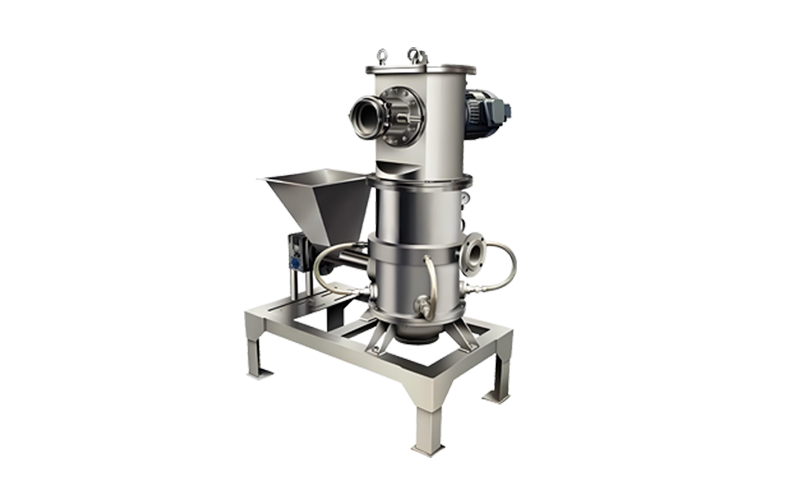
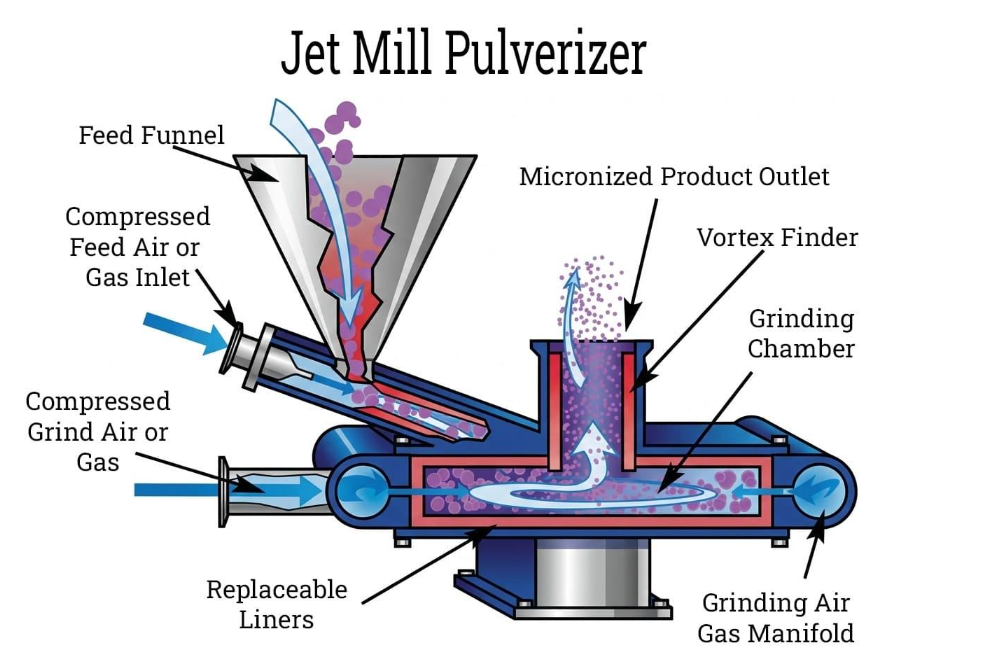
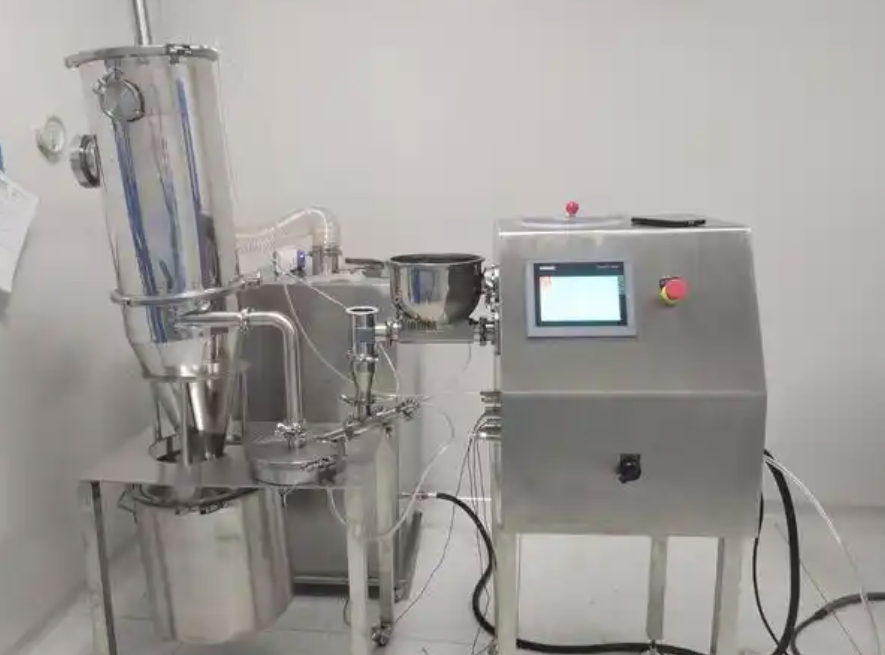
operational guide for laboratory scale jet miller
I. Equipment selection and installation
1. Equipment selection details
In the selection, in addition to considering the nature of the material, crushing size requirements and equipment performance parameters, should also pay attention to the following details:
- Confirm the material of the crushing chamber, whether corrosion-resistant, wear-resistant, in order to adapt to the processing needs of different materials.
- Consider the noise level of the pulverizer and choose the equipment with lower noise to improve the laboratory working environment.
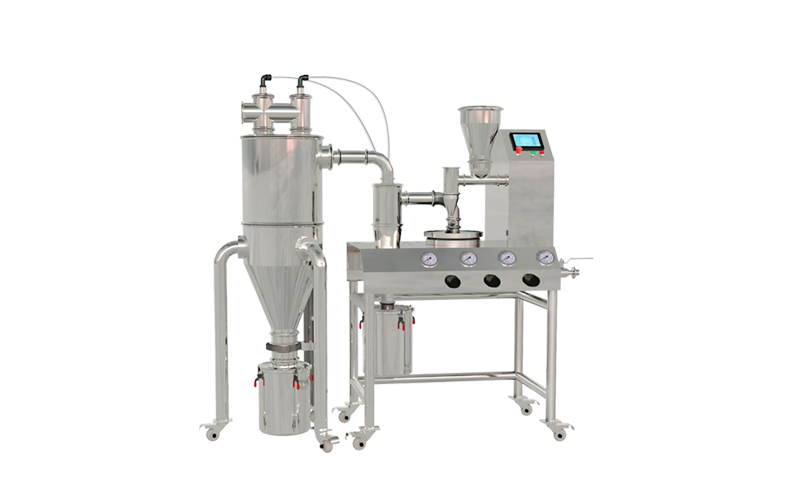
- Check whether the equipment is equipped with a dust collection system to ensure that dust does not escape during the experiment.
2. Equipment installation details
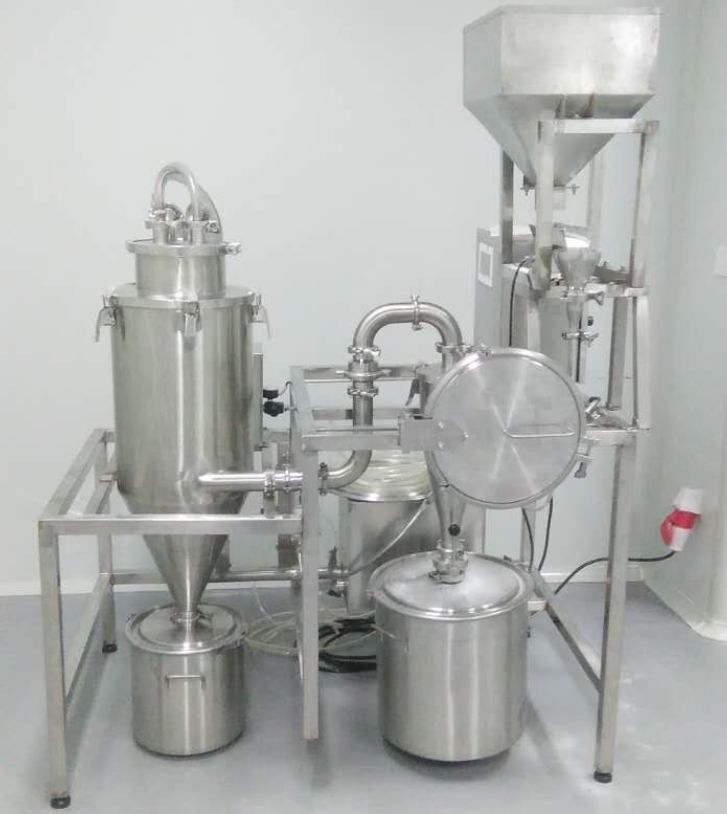
- Before installation, make sure the foundation of the equipment is level to avoid unstable operation of the equipment due to uneven foundation.
- According to the requirements of the manual, correctly connect the components to ensure that all the connection parts are firm.
- After the installation is completed, carry out no-load test run to check whether there is any abnormal sound or vibration of the equipment.
II, the main points of operation
1. Feeding speed control
- When using the feeder, should be adjusted according to the fluidity of the material feeder speed or opening.
- Avoid feeding too fast to cause the accumulation of materials in the crushing chamber, affecting the crushing effect.
- Feeding speed is too slow may lead to reduced crushing efficiency. 2.
2. Crushing pressure adjustment
- The pressure in the grinding chamber can be controlled by adjusting the air inlet valve of the jet mill.
- Pressure adjustment should be carried out gradually to avoid sudden and drastic adjustments, so as not to damage the equipment.
- Observe the crushing of materials to crush the best effect of the pressure shall prevail. 3.
3. Crushing temperature control
- Monitor the temperature inside the crushing chamber to ensure that the material does not exceed the heat-sensitive temperature.
- If the temperature is too high, cooling measures can be taken, such as the installation of cooling devices or adjust the crushing time.
- For flammable and explosive materials, need to take special safety measures.
4. Collection system operation
- Ensure that the collection bag or canister is clean to avoid cross-contamination.
- Regularly check the sealing of the collection system to prevent dust leakage.
- During the collection process, observe the material flow to prevent blockage.
5. Safety Protection
- Before operation, check whether all safety devices are in order, such as emergency stop button and protective cover.
- During operation, wear appropriate personal protective equipment, such as dust mask, goggles, earplugs, etc.
- Understand and follow the operating procedures of the equipment to prevent misuse.
III, the experimental data recording and analysis
The following is a set of experimental data recorded in the actual operation to analyze the performance and operating effect of the jet mill.
1. Experimental conditions
- Material: calcium carbonate (CaCO3)
- Initial particle size: D50 = 150μm
- Target particle size: D50 = 5μm
- Pulverizer model: experimental jet mill
- Crushing chamber pressure: 0.6-0.8 MPa
- Feed rate: 50-100 g/min
2. Experimental data records
Experiment No. | Feeding speed (g/min) | Crushing chamber pressure (MPa) | Crushing time (min) | Product particle size D50 (μm) |
1 | 50 | 0.6 | 10 | 6.2 |
2 | 70 | 0.7 | 10 | 5.8 |
3 | 100 | 0.8 | 10 | 5.1 |
4 | 50 | 0.6 | 15 | 5.5 |
5 | 70 | 0.7 | 15 | 4.9 |
6 | 100 | 0.8 | 15 | 4.3 |
3. Data analysis
- Influence of feeding speed on pulverizing effect: From the comparison of experiments 1, 2 and 3, it can be seen that with the increase of feeding speed, the value of product size D50 decreases, which indicates that the pulverizing effect is improved. However, feeding speed is too fast may lead to the material in the crushing chamber can not be fully crushed.
- Crushing chamber pressure on the effect of crushing: Experiments 1 and 4, 2 and 5, 3 and 6 comparison shows that in the same feeding speed, increase the pressure of the crushing chamber can further reduce the product size D50 value, improve the crushing fineness.
- Crushing time on the effect of pulverization: Comparison of experiments 1, 2, 3 and 4, 5, 6, can be seen to extend the crushing time can also improve the crushing effect, but the increase is not as significant as changing the feed rate and crushing chamber pressure.
IV. Maintenance
1. Daily maintenance
- Before and after each use, check whether the parts of the pulverizer are loose or worn.
- Clean up the residual material in the crushing chamber to avoid clumping affect the next use.
- Check the lubrication system to ensure that the amount of lubricant is appropriate, no leakage.
2. Regular maintenance
- Every certain period of time, disassemble and inspect the key parts of the pulverizer, such as bearings, grinding discs and so on.
- Replace the parts with serious wear and tear to maintain the crushing effect and stability of the equipment.
- Comprehensive cleaning of the mill, including internal and external, to ensure equipment hygiene.
With the above detailed operation and maintenance details, you can ensure the efficient operation and long-term stability of the experimental jet mill, providing reliable powder processing solutions for experimentation and production.
V. Conclusion
By recording and analyzing the above experimental data, we can draw the following conclusions:
- The experimental jet mill can effectively pulverize calcium carbonate to the target particle size under appropriate operating conditions.
- Feeding speed, crushing chamber pressure and crushing time are key factors affecting the crushing effect, which need to be adjusted according to the specific material and crushing requirements.
- Regular maintenance is an important measure to ensure the long-term stable operation of the equipment.
The above experimental data and analysis for the experimental jet mill operation provides a practical reference to help improve the crushing efficiency and product quality. In practical applications, according to the characteristics of different materials, more experiments should be carried out to optimize the operating parameters.