Micron Unit: Understanding the Basics and Its Importance Across Industries
Introduction
When dealing with fine particles, precision measurements, or filtration, the micron unit (µm) is a crucial metric. From air purifiers and water filters to pharmaceutical powders and high-tech manufacturing, understanding the micron unit helps ensure quality, efficiency, and safety.
In this article, we’ll dive deep into what a micron unit is, how it compares to other measurement systems, its importance across various industries, and why it matters for businesses and consumers alike.
I. What is a Micron Unit?
A micron (abbreviated as µm) is a unit of length in the metric system, equal to one-millionth of a meter (1 µm = 0.000001 meters or 1/1000 millimeters).
Micron Unit in Perspective:
• 1 Micron (µm) = 0.001 Millimeters (mm) = 0.000039 Inches (in)
• A Human Hair = Approximately 50-100 µm in Diameter
• Bacteria Size = Typically 0.2 to 2 µm
• HEPA Filter Particle Capture = As small as 0.3 µm
Since micron units measure extremely small particles, they are widely used in fields such as filtration, particle science, and precision manufacturing.
II. Why is the Micron Unit Important?
The micron unit is critical in various applications where size and precision matter. Here’s why:
• Filtration Efficiency – The effectiveness of air, water, and oil filters is determined by the size of particles they can remove (e.g., a 5-micron water filter removes particles larger than 5 µm).
• Precision in Manufacturing – Industries like electronics and aerospace require micron-level precision to ensure product reliability.
• Pharmaceutical & Food Safety – Powdered substances, medicines, and food ingredients are measured in microns to maintain quality and consistency.
• Medical & Laboratory Use – Micron-level precision is vital in blood analysis, bacterial studies, and medical device manufacturing.
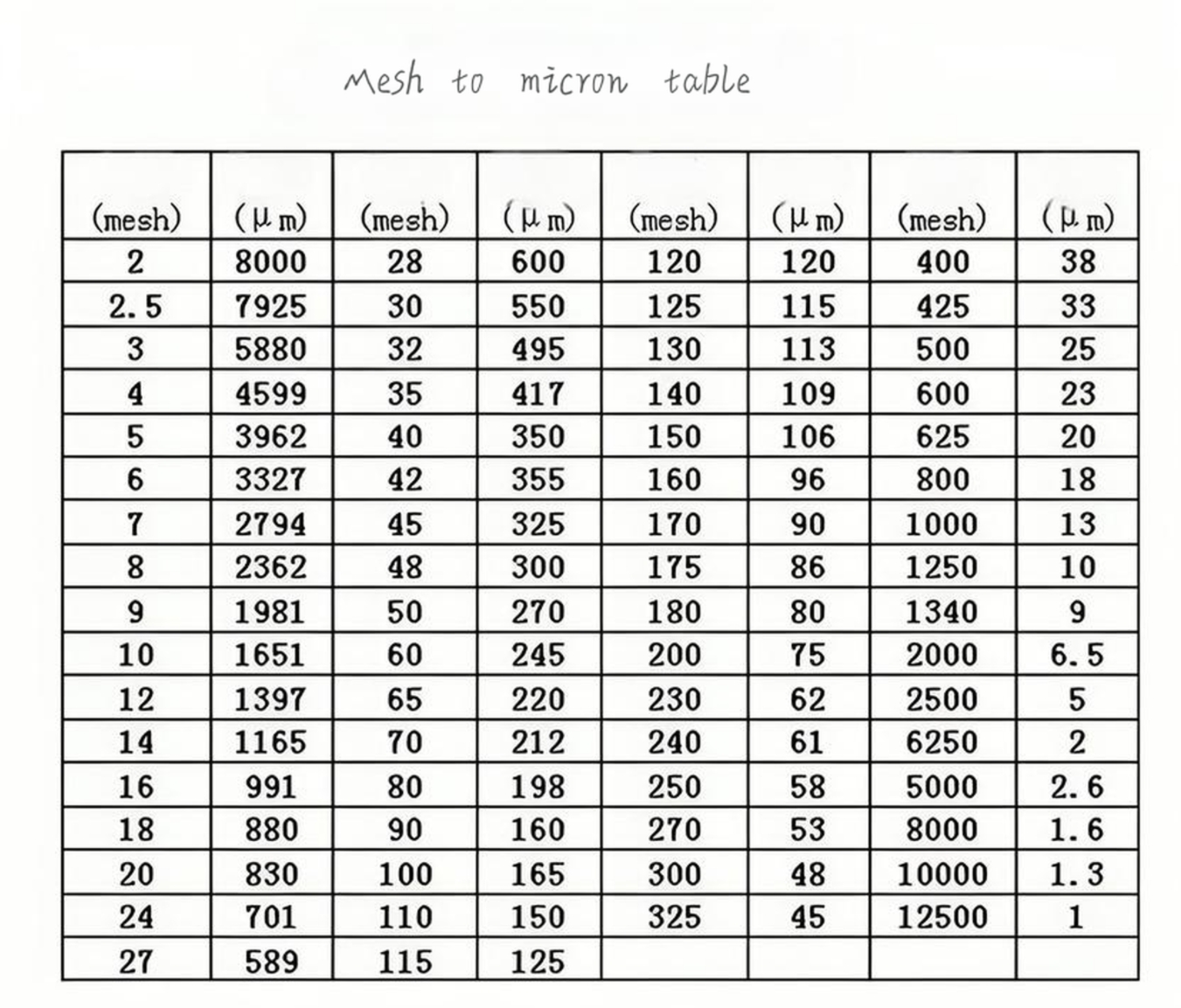
III. Micron Unit Comparison Chart
Measurement | Size in Microns (µm) | Example |
1000 µm (1 mm) | 1000 µm | Sand Grain |
500 µm | 500 µm | Fine Beach Sand |
100 µm | 100 µm | Human Hair (thick) |
50 µm | 50 µm | Fine Flour |
10 µm | 10 µm | Pollen Grain |
5 µm | 5 µm | Bacteria |
0.3 µm | 0.3 µm | HEPA Filter Efficiency Limit |
0.1 µm | 0.1 µm | Viruses |
IV. Applications of Micron Measurement in Different Industries
1. Air & Water Filtration
• HEPA Filters: Capture airborne particles as small as 0.3 µm, removing allergens, bacteria, and pollutants.
• Water Filters: Rated in microns to determine what impurities they remove, with ultrafiltration systems filtering particles as small as 0.01 µm.
2. Pharmaceutical & Chemical Processing
• Powdered Drugs & Active Ingredients: Micron-sized particles ensure proper absorption and efficacy.
• Industrial Chemical Processing: Uses micron measurement for precise mixing and separation of particles.
3. Semiconductor & High-Tech Manufacturing
• Microchip Production: Requires ultra-precise processes at the sub-micron level (nanometers and below).
• Optics & Nanotechnology: Uses micron measurements to create ultra-thin films and precision coatings.
4. Automotive & Industrial Applications
• Oil & Fuel Filtration: Uses micron-rated filters to prevent engine damage.
• Aerospace Engineering: Requires micron precision in metal cutting, shaping, and finishing.
V. How Micron Measurement Impacts Daily Life
• Cleaner Air & Water: Micron-sized filters keep pollutants and bacteria out of the air and drinking water.
• Better Skincare Products: Cosmetic manufacturers use micron technology for smoother, more effective products.
• Safer Food Processing: Micron-rated sieves remove unwanted particles in flour, sugar, and spices.
Whether it’s the quality of the air we breathe, the water we drink, or the medicines we take, micron-level precision plays a significant role in our everyday lives.
VI. Choosing the Right Micron Measurement for Your Needs
When selecting a filter, powder, or industrial material, consider these factors:
• Particle Size Requirements: Do you need to remove bacteria (0.3-2 µm) or dust particles (10-50 µm)?
• Application-Specific Needs: Air filtration requires smaller micron ratings than water filtration.
• Efficiency vs. Flow Rate: Smaller micron sizes trap finer particles but may slow down filtration flow rates.
VII. Future Trends in Micron-Level Technology
• Nanotechnology Advancements – Moving from microns to nanometers (1 µm = 1000 nm) for even higher precision.
• Eco-Friendly Filtration – Developing biodegradable filters that remove sub-micron pollutants efficiently.
• Medical & Space Applications – Using micron and sub-micron filtration to create life-supporting environments in space missions.
Final Thoughts
Understanding the micron unit is essential for industries that rely on precision, efficiency, and safety. Whether you’re choosing a water filter, air purifier, or precision-manufactured product, knowing how microns work can help you make informed decisions.
Would you like to optimize your filtration system, improve powder handling, or enhance precision manufacturing? Contact us for expert guidance!