Jet Mill Technology for the European Pharmaceutical Industry: A Detailed Analysis
Introduction to Jet Mill Technology
Jet milling is a crucial technology in the European pharmaceutical industry, enabling the production of ultra-fine powders with precise particle size distribution. As the demand for high-purity, micronized, and nano-sized pharmaceutical ingredients continues to grow, jet mills have become an essential tool for pharmaceutical manufacturers.
This article explores the working principle, advantages, and applications of jet mill technology in the European pharmaceutical sector, while optimizing content for Google SEO with high-ranking keywords.
How Jet Mill Technology Works
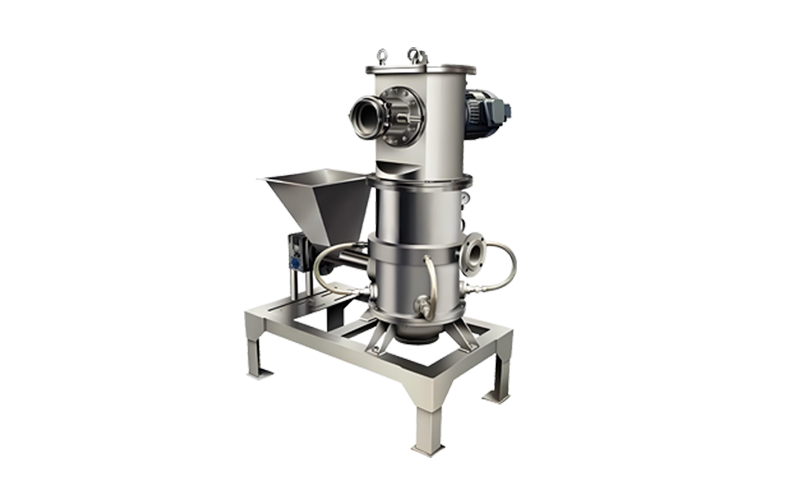
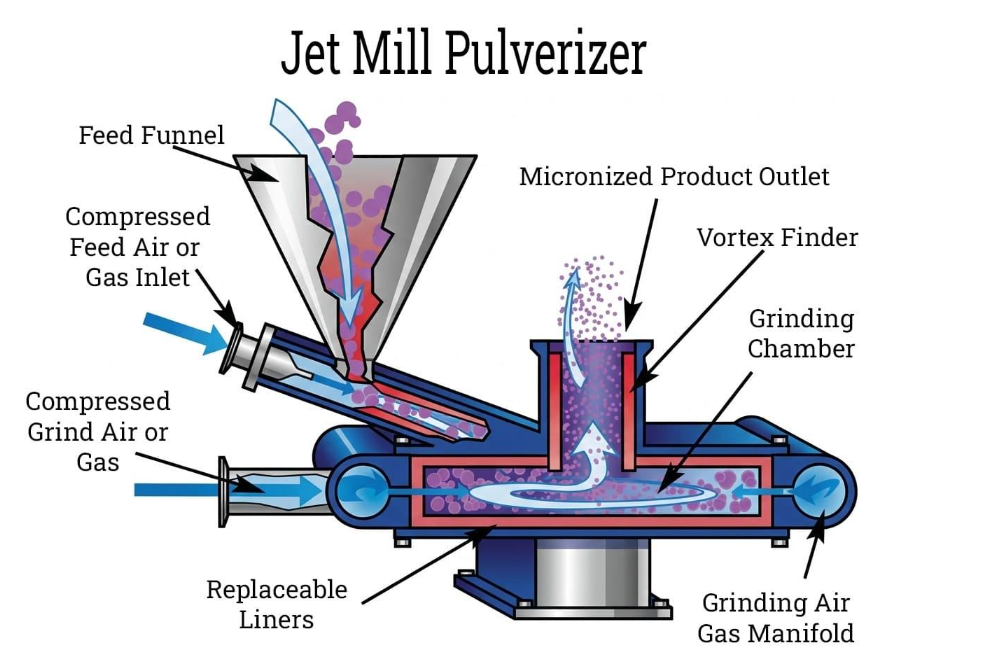
A jet mill is a fluid energy milling system that uses compressed gas (typically air, nitrogen, or steam) to grind and micronize pharmaceutical powders. Unlike traditional milling methods, jet mills achieve ultra-fine particle sizes without mechanical grinding media, reducing the risk of contamination and ensuring high product purity.
Key Working Principles
1. Gas-Powered Particle Acceleration – High-pressure compressed air or gas is injected into the milling chamber, creating a high-velocity stream.
2. Particle Collision & Micronization – Particles inside the chamber collide at high speeds, breaking down into sub-micron or micron-sized powders.
3. Cyclonic Separation & Collection – The classified fine particles are collected through a cyclone separator, while larger particles continue to recirculate until they reach the desired size.
Advantages of Jet Mill Technology in the European Pharmaceutical Industry
1. Ultra-Fine Particle Size Control – Jet mills can micronize API (Active Pharmaceutical Ingredients) to sizes below 5 microns, improving drug solubility and bioavailability.
2. No Contamination Risk – As no mechanical grinding components are used, there is zero metal contamination, ensuring GMP and FDA compliance.
3. Temperature Control for Heat-Sensitive Drugs – Unlike mechanical mills, jet mills generate minimal heat, making them ideal for temperature-sensitive pharmaceuticals.
4. Improved Drug Absorption & Dissolution – The fine and uniform particle size ensures better drug dispersion and higher absorption rates in the human body.
5. Scalability & Flexibility – Jet mills can be used for small-scale R&D batches and large-scale pharmaceutical production, making them suitable for clinical trials and commercial drug manufacturing.
6. Compliance with European Regulatory Standards – Jet mill technology meets the strict regulatory requirements of EMA (European Medicines Agency), GMP (Good Manufacturing Practices), and EU pharmaceutical guidelines.
Applications of Jet Mills in the European Pharmaceutical Industry
1. Micronization of Active Pharmaceutical Ingredients (APIs)
• Jet mills are widely used for reducing API particle size, enhancing drug solubility and bioavailability.
• Common APIs processed include antibiotics, steroids, painkillers, and oncology drugs.
2. Pulmonary Drug Delivery & Inhalable Powders
• Producing ultra-fine pharmaceutical powders (1-5 microns) for dry powder inhalers (DPI) and pulmonary drug delivery systems.
• Essential for asthma medications and respiratory treatments.
3. Tablet & Capsule Formulations
• Ensuring consistent particle size distribution for uniform drug blending in tablet and capsule production.
• Reducing tablet disintegration time, leading to faster drug action.
4. Nano-Milling for Advanced Drug Development
• Jet mills enable nano-particle production, crucial for biopharmaceuticals and nanomedicine.
• Supports the development of targeted drug delivery systems.
Why the European Pharmaceutical Industry Prefers Jet Milling
The European pharmaceutical market is known for its high regulatory standards, advanced drug formulations, and focus on precision medicine. Jet mill technology aligns with these requirements by providing:
• Compliance with EU GMP & EMA Standards
• Ability to Process High-Purity Pharmaceuticals
• Support for Complex Drug Formulations
• Eco-Friendly, Solvent-Free Milling Process
Future Trends in Jet Milling for Pharmaceuticals
1. Nano-Milling for Precision Medicine – The rise of personalized medicine is driving demand for nanoparticle drug formulations.
2. Sustainable & Green Processing – European pharma companies are investing in eco-friendly, solvent-free jet milling.
3. Automation & Smart Jet Milling Systems – The integration of AI-driven particle size monitoring is improving precision and efficiency.
Conclusion
Jet mill technology is revolutionizing the European pharmaceutical industry, offering precision micronization, contamination-free processing, and improved drug bioavailability. As the demand for high-performance, compliant, and scalable milling solutions increases, jet mills remain the preferred choice for pharmaceutical manufacturers.