Air Jet Milling System for Pharmaceutical Powders
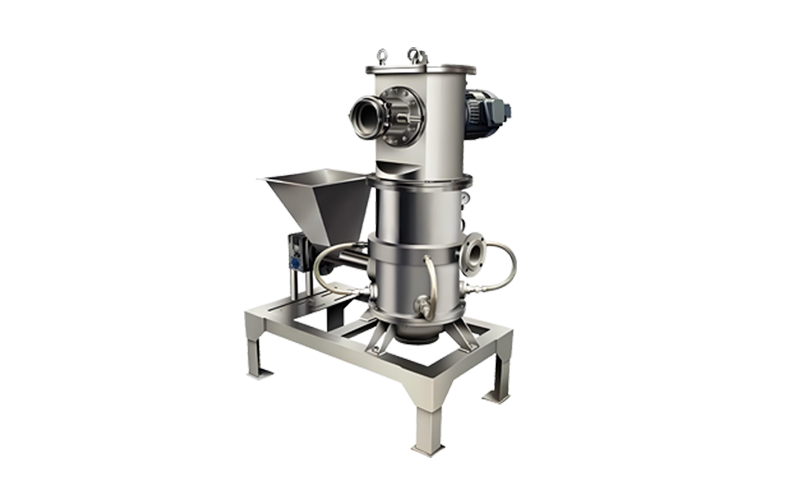
Air Jet Milling Systems for ultrafine powder production. Our solutions deliver tight particle size distribution, low contamination risk, and scalable throughput — ideal for Jet Mill for Pharmaceutical Powder and chemicals.
Why choose an Air Jet Milling System?
Achieves sub-micron to low-micron particle sizes
Minimal contamination — no grinding media
Low temperature operation for heat-sensitive materials
Customizable collectors, classifiers and feed systems
What is an Air Jet Milling System?
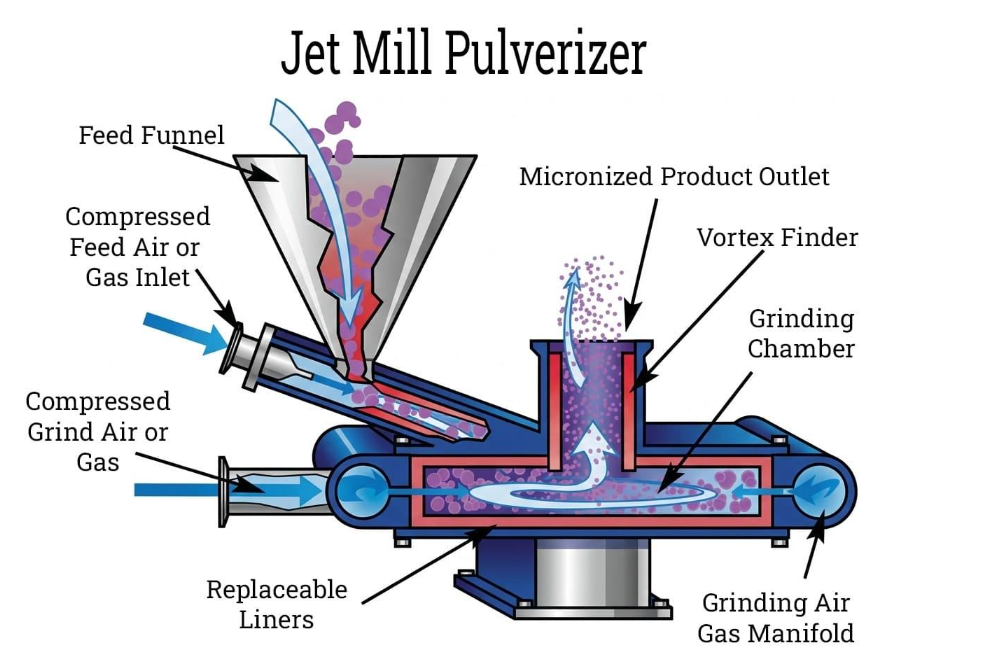
An Air Jet Milling System (also called a jet mill or fluid energy mill system) uses compressed air or inert gas to accelerate particles to high velocity. Particle-on-particle collisions in a turbulent airstream lead to size reduction. A dynamic classifier separates desired fine particles from coarser ones, returning oversized particles for re-milling. The result: narrow particle size distribution and high-purity ultrafine powders suitable for pharmaceutical and high-tech applications.
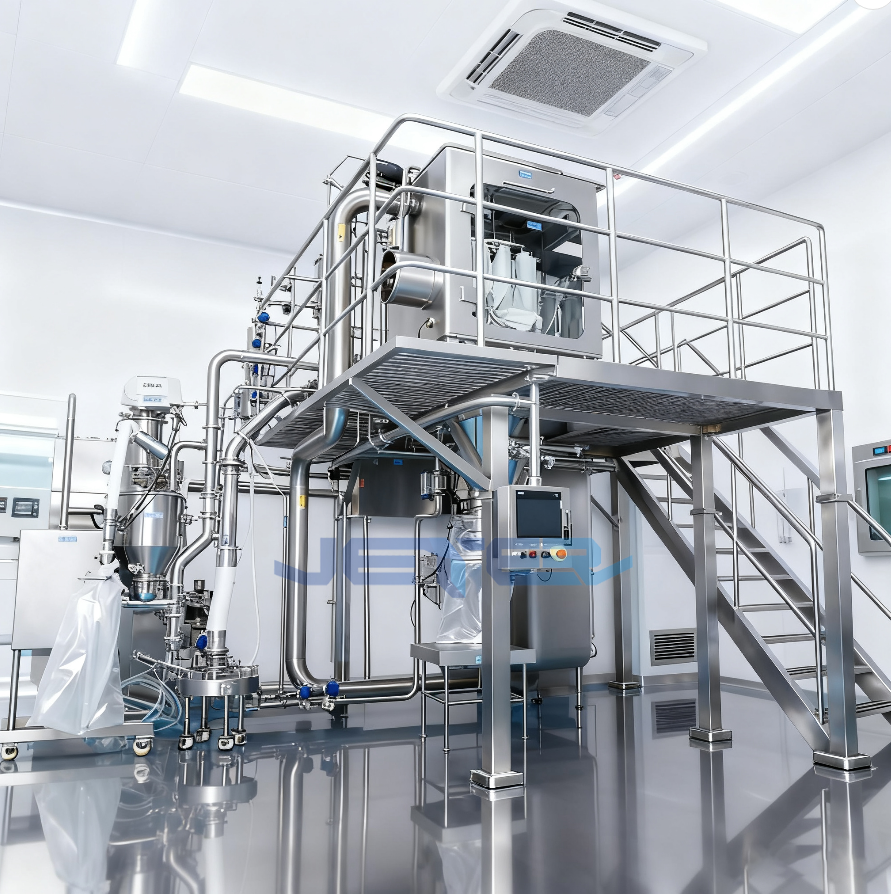
Core Components of a Complete Jet Mill System
| Component | Function |
|---|---|
| Compressed Air / Gas Supply | Provides the motive energy. Includes dryer & filters to remove moisture and oil. |
| Feed System | Controlled feeder (screw/venturi) ensures stable feed rate to the mill. |
| Jet Mill Chamber | High-velocity nozzles create particle collisions for micronization. |
| Dynamic Classifier | Separates fines and controls final particle size distribution. |
| Collector & Filters | Cyclone or baghouse for product collection and dust control. |
| Exhaust & Safety | Ventilation, inerting (N2), and explosion protection where required. |
Advantages Over Mechanical Mills
Purity & Contamination Control
No grinding media contact means no metallic wear contamination — ideal for APIs.
Low-Temperature Operation
Adiabatic cooling from gas expansion helps protect heat-sensitive compounds.
Particle Size Precision
Dynamic classifiers enable narrow PSD (particle size distribution).
Modular & Scalable
System can be configured for lab, pilot or full production lines.
Typical Applications
Air Jet Milling Systems are widely used in:
Pharmaceuticals: API micronization, inhalable powders, sterile formulations.
Chemicals & Catalysts: Fine chemicals, catalyst supports, specialty pigments.
Food & Nutraceuticals: Spices, flavor powders, high-value nutrition ingredients.
Advanced Materials: Battery powders, ceramics, coatings.
Selection Checklist — Choose the Right Jet Mill System
Before selecting a system, confirm the following:
Target particle size & required throughput (kg/h)
Material properties (hardness, friability, moisture)
Regulatory requirements (GMP, food-grade, ATEX)
Available utilities (compressed air, steam, power)
Containment needs (dust control, explosion protection)
Typical Technical Data (Example)
| Parameter | Typical Range |
|---|---|
| Final Particle Size (D50) | 0.5 – 10 µm (model dependent) |
| Throughput | 1 – 500 kg/h (lab to production) |
| Operating Pressure | 0.4 – 1.0 MPa |
| Power | Compressed air driven (compressor sizing dependent) |
How We Support Your Project
We deliver turnkey solutions — from lab trials and pilot tests to full production systems. Our services include material testing, process validation, GMP documentation, local commissioning and spare parts support.
Ready to evaluate an Air Jet Milling System?
Send us: material name, initial particle size, target D50, throughput (kg/h), and any regulatory constraints. We will return a tailored technical proposal and estimated lead time.
FAQ — Frequently Asked Questions
Can jet mills process heat-sensitive APIs?
Yes — due to low friction and the cooling effect of expanding compressed gas, many heat-sensitive materials can be processed with appropriate controls.
How do you prevent contamination?
We use high-purity construction materials (SUS316L as option), sanitary seals, and upstream air filtration to minimize any contamination risk.
Do you provide pilot testing?
Yes. We offer lab and pilot testing services to validate feasibility and determine optimal operating parameters.