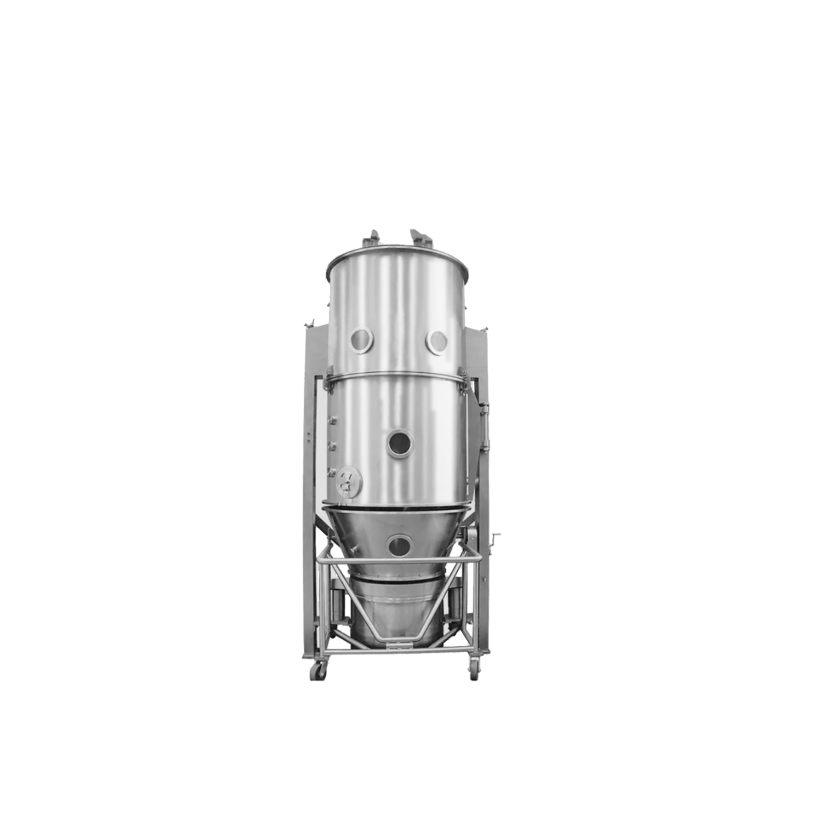
Fluid Bed Dryer
Fluid Bed Drying & Granulation
Integrated Mixing, Granulation and Drying
FZG Models from 12 L to 2,500 L
Efficient Hot-Air Fluidization
Optional Dual-Fluid Spray Atomization
Enclosed Powder Processing
Custom Equipment Configuration for Pharmaceutical, Food and Chemical Applications
Industrial Fluid Bed Dryer for Powder Drying and Granulation
JETER Fluid Bed Dryer is designed for drying powders and granules through controlled hot-air fluidization. Depending on the process configuration, the equipment can also perform spray granulation by introducing a liquid binder into the fluidized material bed.
During operation, filtered and heated air passes through the material, suspending individual particles and promoting heat and mass transfer. When granulation is required, a binder solution is atomized into the fluidized bed to encourage particle agglomeration and granule formation. Moisture is subsequently removed by the heated airflow.
By combining material fluidization, heat transfer and optional liquid spraying in an enclosed processing chamber, the system supports batch powder drying and granulation applications.
JETER offers multiple FZG models with vessel volumes ranging from 12 L to 2,500 L, allowing equipment selection according to material characteristics, batch size and production requirements.
Key Features of JETER Fluid Bed Dryer
Efficient Fluidization: Heated airflow suspends and moves particles to support heat and mass transfer.
Drying and Granulation: Drying and optional spray granulation can be performed using the appropriate process configuration.
Filtered Air Supply: Primary and intermediate air filtration stages are included in the described air-handling process.
Controlled Liquid Atomization: A dual-fluid atomizer can introduce binder solution into the fluidized bed for granulation.
Enclosed Processing: Material processing takes place inside an enclosed chamber.
Multiple Capacity Options: FZG models cover vessel volumes from 12 L to 2,500 L.
Application-Based Configuration: Operating temperature, air supply and processing conditions can be evaluated according to material requirements.
What Is a Fluid Bed Dryer?
A fluid bed dryer, also known as a fluidized bed dryer, is an industrial drying machine that uses heated airflow to suspend and fluidize particles.
When air passes upward through a perforated distribution plate at a suitable velocity, the particles begin to move and behave similarly to a fluidized mass.
This movement increases contact between the heated air and the material, supporting moisture evaporation and particle drying.
Fluid bed drying is commonly used for powders, granules and other materials that can be effectively fluidized under suitable operating conditions.
For processes requiring granule formation, a liquid binder can also be introduced through an atomizing nozzle. This allows the equipment to perform spray granulation before the final drying stage.
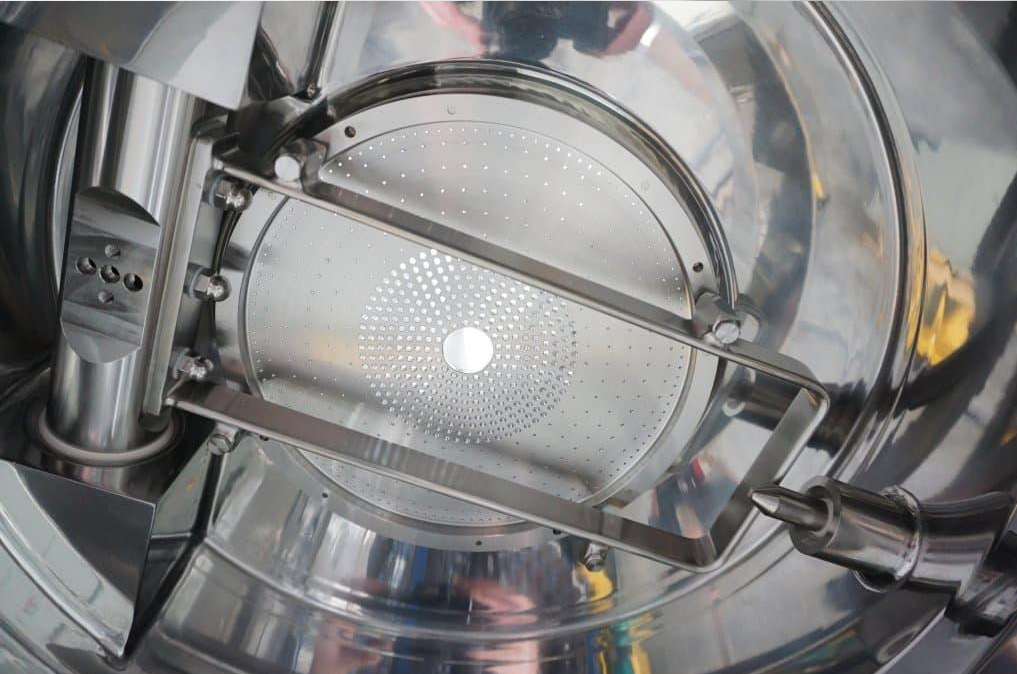
Working Principle of Fluid Bed Drying and Granulation
The JETER fluid bed drying process involves several interconnected stages.
1. Air Filtration
Ambient air passes through primary and intermediate filtration stages to reduce airborne contaminants before entering the heating section.
2. Air Heating
The filtered air enters the heating chamber, where it is heated to the required inlet temperature according to the material characteristics and process requirements.
3. Material Fluidization
The heated air enters the processing chamber from the bottom through the air distribution system.
The upward airflow suspends the particles and creates a fluidized material bed.
4. Binder Atomization for Granulation
When granulation is required, a binder solution is supplied by an infusion pump to a dual-fluid atomizer.
The atomized liquid is sprayed onto the moving particles, promoting particle adhesion and granule growth.
This operation is applicable to processes requiring powder agglomeration and granule formation.
5. Moisture Evaporation
The heated airflow transfers energy to the material and carries away evaporated moisture.
The drying conditions depend on the material's initial moisture content, thermal sensitivity, particle properties and required final moisture level.
6. Exhaust and Powder Recovery
Moisture-laden air and entrained fine particles are directed through the exhaust and recovery system.
The processed material is discharged after the required drying or granulation cycle is completed.
Main Components of a Fluid Bed Dryer
A typical fluid bed drying system consists of several functional assemblies.
Air Filtration System
The air filtration section provides primary and intermediate filtration before the air enters the heating chamber.
Filtration requirements should be determined according to the application and the required process air quality.
Heating System
The heating section raises the filtered air to the specified operating temperature.
The heating arrangement and thermal capacity should be selected according to the material, evaporation load and production requirements.
Fluidization Chamber
The processing chamber provides the space for material fluidization.
Its design allows heated air to pass through the material bed and supports particle movement during drying.
Air Distribution System
The air distribution section introduces heated air into the material chamber and helps establish the required fluidization conditions.
Atomization System
For granulation applications, a dual-fluid atomizer introduces binder solution into the fluidized material bed.
The atomization arrangement should be evaluated according to binder properties, spray characteristics and target granule specifications.
Exhaust and Recovery System
The exhaust section removes humid air from the processing chamber.
A powder recovery arrangement helps collect entrained particles and reduce product loss.
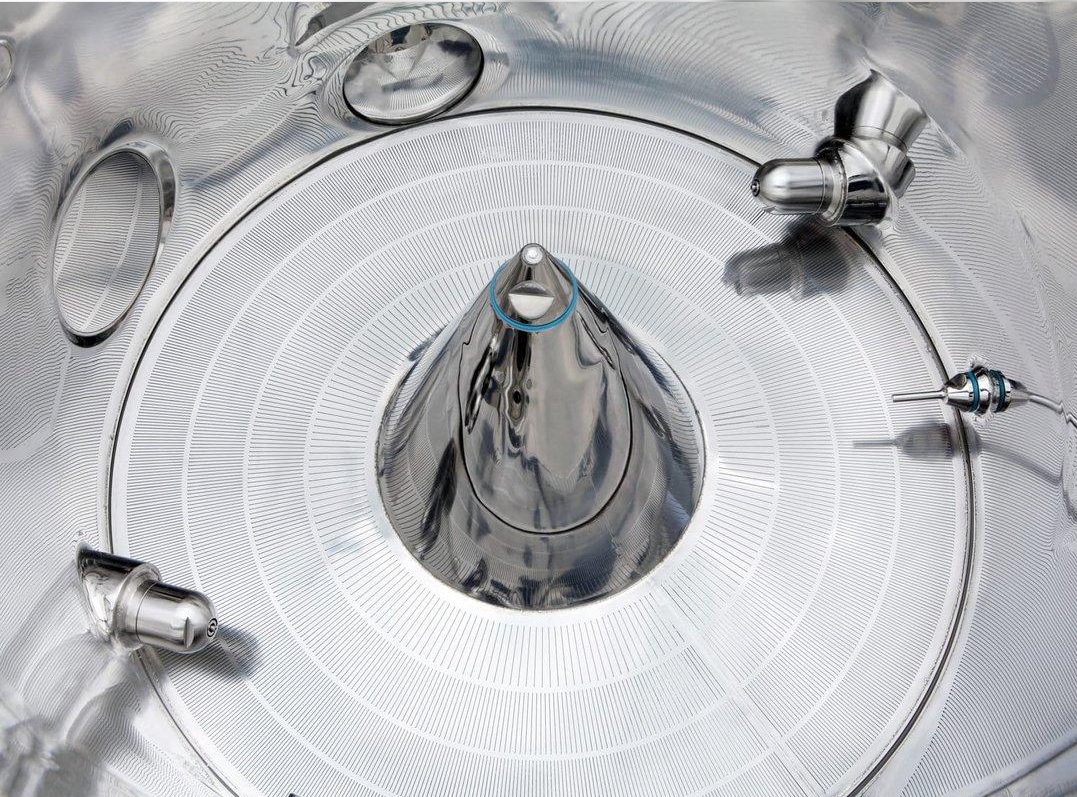
Fluid Bed Dryer Technical Specifications
JETER offers a range of FZG Series Fluid Bed Dryers for different processing capacities.
The following specifications are based on the standard model data.
FZG Series Model Specifications
| Model | Vessel Volume (L) | Capacity (kg) | Steam Consumption (kg/h) | Compressed Air Consumption (m³/min) | Power (kW) | Air Pressure (MPa) | Drying Time (min) | Height (mm) | Diameter (mm) |
|---|---|---|---|---|---|---|---|---|---|
| FZG-3 | 12 | 1.5–4 | 12 | 0.3 | 3 | 0.6 | 30–60 | 2100 | 300 |
| FZG-5 | 22 | 4–6 | 23 | 0.3 | 4 | 0.6 | 30–60 | 2300 | 400 |
| FZG-30 | 100 | 15–36 | 70 | 0.3 | 5.5 | 0.6 | 30–60 | 2500 | 700 |
| FZG-60 | 220 | 30–72 | 140 | 0.6 | 7.5 | 0.6 | 30–60 | 3000 | 1000 |
| FZG-120 | 420 | 80–140 | 211 | 0.6 | 18.5 | 0.6 | 30–60 | 3300 | 1200 |
| FZG-200 | 670 | 100–240 | 282 | 0.9 | 22 | 0.6 | 30–60 | 3800 | 1400 |
| FZG-300 | 1000 | 150–360 | 366 | 0.9 | 30 | 0.6 | 15–20 | 4000 | 1600 |
| FZG-500 | 1500 | 250–600 | 465 | 0.9 | 45 | 0.6 | 15–20 | 4800 | 1800 |
| FZG-1000 | 2500 | 500–1100 | 800 | 1.5 | 75 | 0.6 | 15–20 | 6200 | 2200 |
Additional Operating Specifications
| Parameter | Standard Specification |
|---|---|
| Operating Temperature | Ambient temperature to approximately 120°C, depending on material characteristics |
| Powder Recovery Rate | Greater than 99% |
Technical note: The specifications above are based on the supplied FZG Series data. Capacity, drying time and operating temperature depend on material properties and actual process conditions. Final equipment specifications should be confirmed during technical evaluation.
How to Select the Right Fluid Bed Dryer
Selecting a suitable fluid bed dryer requires more than comparing vessel volumes.
The following factors should be considered during equipment selection.
1. Material Characteristics
The physical and thermal properties of the material directly affect fluidization and drying performance.
Important information includes:
Particle size and particle size distribution
Bulk density
Initial moisture content
Required final moisture content
Material flowability
Heat sensitivity
Tendency to agglomerate
2. Required Processing Capacity
Determine the required batch weight and production frequency.
The FZG Series provides different vessel volumes and processing capacities to accommodate different production requirements.
3. Drying Temperature
The appropriate inlet air temperature depends on the material's thermal stability and moisture removal requirements.
Heat-sensitive materials may require more carefully controlled processing conditions.
4. Granulation Requirements
If the process involves powder granulation, the binder solution, spray characteristics and target granule size should be evaluated.
The atomization arrangement and operating conditions need to match the material formulation.
5. Air Supply and Heating Requirements
Steam consumption, compressed air consumption and installed power should be considered during equipment selection and factory utility planning.
The final utility requirements should be confirmed against the selected model and actual operating configuration.
Applications of Fluid Bed Drying Equipment
Fluid bed dryers are used in industries that require controlled drying of powders and granules.
Pharmaceutical Industry
Potential applications include:
Pharmaceutical granules
Powder intermediates
Pharmaceutical excipients
Herbal extracts and compatible powdered materials
Granulated formulations
For pharmaceutical applications, equipment materials, cleaning arrangements, process controls and applicable GMP requirements should be specified according to the customer's production standards.
Food Industry
Potential applications include:
Food ingredient granules
Nutritional powder intermediates
Food additives
Compatible powdered ingredients
The processing conditions should be selected according to the product's moisture, temperature and hygiene requirements.
Chemical Industry
Typical applications include:
Chemical powder intermediates
Industrial granules
Chemical additives
Specialty chemical materials
Material compatibility, thermal properties and solvent characteristics should be evaluated before equipment selection.
Advanced Materials
Fluid bed drying may also be considered for selected advanced material applications where controlled moisture removal and powder agglomeration are required.
The suitability of the process depends on the physical and chemical properties of the material.
Fluid Bed Dryer vs. Fluid Bed Granulator
Although the terms are closely related, fluid bed drying and fluid bed granulation describe different processing objectives.
| Comparison | Fluid Bed Dryer | Fluid Bed Granulator |
|---|---|---|
| Main Purpose | Moisture removal | Powder agglomeration and granule formation |
| Main Process | Heated-air fluidization | Fluidization with binder spraying |
| Liquid Addition | Not necessarily required | Typically required for binder-based granulation |
| Main Output | Dried powder or granules | Newly formed granules |
| Key Process Parameters | Temperature, airflow, moisture and drying time | Binder spray rate, atomization, airflow and drying conditions |
A fluid bed system configured for both operations can support spray granulation followed by drying within the same processing chamber.
The appropriate process configuration depends on the material formulation and desired product characteristics.
Integration into a Complete Powder Processing Line
A fluid bed dryer can operate as an individual processing machine or as part of a complete powder production line.
Depending on the production process, it can be integrated with:
Powder feeding systems
Wet granulation equipment
Mixing equipment
Screening and sizing equipment
Material conveying systems
Powder collection systems
Storage and packaging equipment
JETER provides powder processing equipment and engineering solutions to help customers coordinate different stages of material preparation, granulation, drying and handling.
Why Choose JETER Fluid Bed Drying Equipment?
Selecting industrial drying equipment requires an understanding of both the material and the production process.
JETER specializes in powder processing machinery and integrated production solutions for pharmaceutical, chemical, food and advanced material industries.
Our equipment selection approach considers:
Material properties and moisture characteristics
Required batch capacity
Drying and granulation requirements
Heating and compressed air utilities
Equipment dimensions and installation conditions
Integration with upstream and downstream equipment
From individual fluid bed dryers to integrated powder processing systems, JETER supports customers in evaluating practical equipment configurations for their production needs.
Frequently Asked Questions About Fluid Bed Dryers
What is a fluid bed dryer used for?
A fluid bed dryer is used to remove moisture from powders and granules through heated-air fluidization. It is commonly used in pharmaceutical, food and chemical processing applications.
How does a fluidized bed dryer work?
Filtered and heated air passes upward through the material bed, suspending and moving the particles. Heat transfers from the air to the material, while evaporated moisture is carried away through the exhaust system.
Can a fluid bed dryer also perform granulation?
Yes. When equipped with a suitable liquid atomization system, a fluid bed machine can spray a binder solution onto fluidized particles to promote agglomeration and granule formation, followed by drying.
What is the capacity range of the JETER FZG Series?
The standard FZG Series includes vessel volumes from 12 L to 2,500 L, with listed processing capacities ranging from 1.5–4 kg to 500–1,100 kg, depending on the model and material.
What determines the drying time?
Drying time depends on initial moisture content, required final moisture level, material characteristics, batch loading, inlet air temperature and airflow conditions.
What is the powder recovery rate?
The supplied standard specification lists a powder recovery rate of greater than 99%. Actual recovery performance should be confirmed according to the material and operating conditions.
How do I select the right FZG model?
Model selection should consider batch weight, material bulk density, initial and final moisture content, thermal sensitivity and production frequency.
Providing these details allows JETER to evaluate an appropriate model and processing configuration.
Request a Fluid Bed Dryer Solution from JETER
Looking for industrial fluid bed drying or spray granulation equipment?
JETER can help evaluate your material and production requirements to identify a suitable FZG Series configuration.
To receive a technical recommendation and quotation, please provide:
Material name and application
Initial moisture content
Required final moisture content
Material bulk density
Required batch weight or production capacity
Drying or granulation requirements
Available heating utilities
Special process or equipment requirements
Contact JETER to Discuss Your Fluid Bed Drying Project.